 EN
EN  العربية
  Български
  Čeština
  Dansk
Dansk  Deutsch
  Ελληνικά
  Español
  Suomi
Suomi  Français
  עברית
עברית  हिन्दी
  Bahasa Indonesia
  Italiano
  日本語
日本語  한국어
한국어  Bahasa Melayu
  Nederlands
  Norsk
Norsk  Polski
  Português
  Română
  Русский
  Svenska
  Kiswahili
  ไทย
ไทย  Türkçe
  Українська
  Tiếng Việt
  中文
中文 How I Built a Six-Figure Bridal Hair Business by Treating Billing Like a Business
By Amara Johnson, Master Hairstylist & Bridal Specialist — Chicago, IL
Ten years ago I was doing wash-and-sets and silk presses out of a rented chair in someone else’s salon. I was good at what I did, I was building a following, and I was making enough money to cover my chair rental and take home a modest income. By a lot of measurements, things were going fine.
What changed everything was getting a call from a bride.
She had found me through Instagram. She loved my work. She wanted me for her wedding morning — herself, her maid of honor, and four bridesmaids. Could I do it? I said yes. We agreed on a price over the phone. I showed up at 6 AM at her hotel suite, worked for five hours straight, and left with cash in an envelope.
I thought: this is it. Bridal is where I want to be.
What I did not think about — what did not occur to me for the next three years — was that the cash-in-an-envelope model was not going to sustain a bridal business. Not really. Not in any way that gave me security, predictability, or protection from the inevitable things that go wrong in the wedding industry.
The Year Things Started Going Wrong
By my third year of serious bridal work, I had a recognizable problem. I was booking thirty to forty weddings per year. I had a reputation in Chicago’s bridal market. Photographers were tagging me. Venues were whispering my name.
And I was constantly anxious about money.
The anxiety was not from lack of bookings. It was from the way I managed them. Every bridal booking went through the same informal process: a conversation on the phone or over Instagram DM, a verbal agreement on price, a handshake understanding that they would pay me on the wedding day. No deposit. No written confirmation. No documented scope.
In one particularly painful June, I had four bridal bookings scheduled. Three of them made it to the wedding. One of them — the largest of the four, a bride I had spent three separate consultation hours with — called me two weeks before the wedding to say she had decided to go with a “friend who does hair.” No explanation. No compensation. No obligation, because there had been no commitment.
I lost a full Saturday of peak wedding season income. I had turned down two other bookings for that date. And I had nothing to show for three hours of consultation, a trial session, and a held date.
That was the Friday I downloaded an invoice app.
What Changed When I Started Invoicing Like a Business
The first thing I did with InvoiceFlow was create a bridal services catalog. Bridal Updo: $280. Bridal Blowout: $200. Bridal Trial: $150. Bridesmaid Updo: $200. Bridesmaid Blowout: $160. Junior Bridesmaid: $120. Flower Girl: $80. Early Morning Supplement (before 6 AM): $75. Travel to Venue: mileage-based.
It took about an hour. But in that hour I did something I had never done before in three years of bridal work: I formalized my prices. I stopped quoting from memory. I stopped having vague conversations about “around X” and “probably Y.” Every service had a name and a number, and the number was the number.
The second thing I did was create a deposit invoice template. 35% of the total booking, due immediately after the consultation. The invoice included the wedding date, the bride’s name, the full list of services agreed upon, and the deposit amount with the balance due date.
The first bride I sent a deposit invoice to paid it in four hours. She sent a note thanking me for the “professional follow-up.” I had been in bridal hair for three years. This was the first time anyone had ever called my billing professional. It felt like a revelation.
Bridal Mornings: The Full Invoice That Protects Everyone
The deposit is the beginning. The full invoice is the document that protects both of us on the wedding day.
Before InvoiceFlow, I showed up on wedding mornings with a number in my head. The bride would sometimes have a different number in her head. Sometimes family members who had been told “Amara is coming” had no idea what the wedding party hair was going to cost. There were awkward conversations at the end of a six-hour morning when everyone was dressed and ready and I was standing by the door waiting for the check.
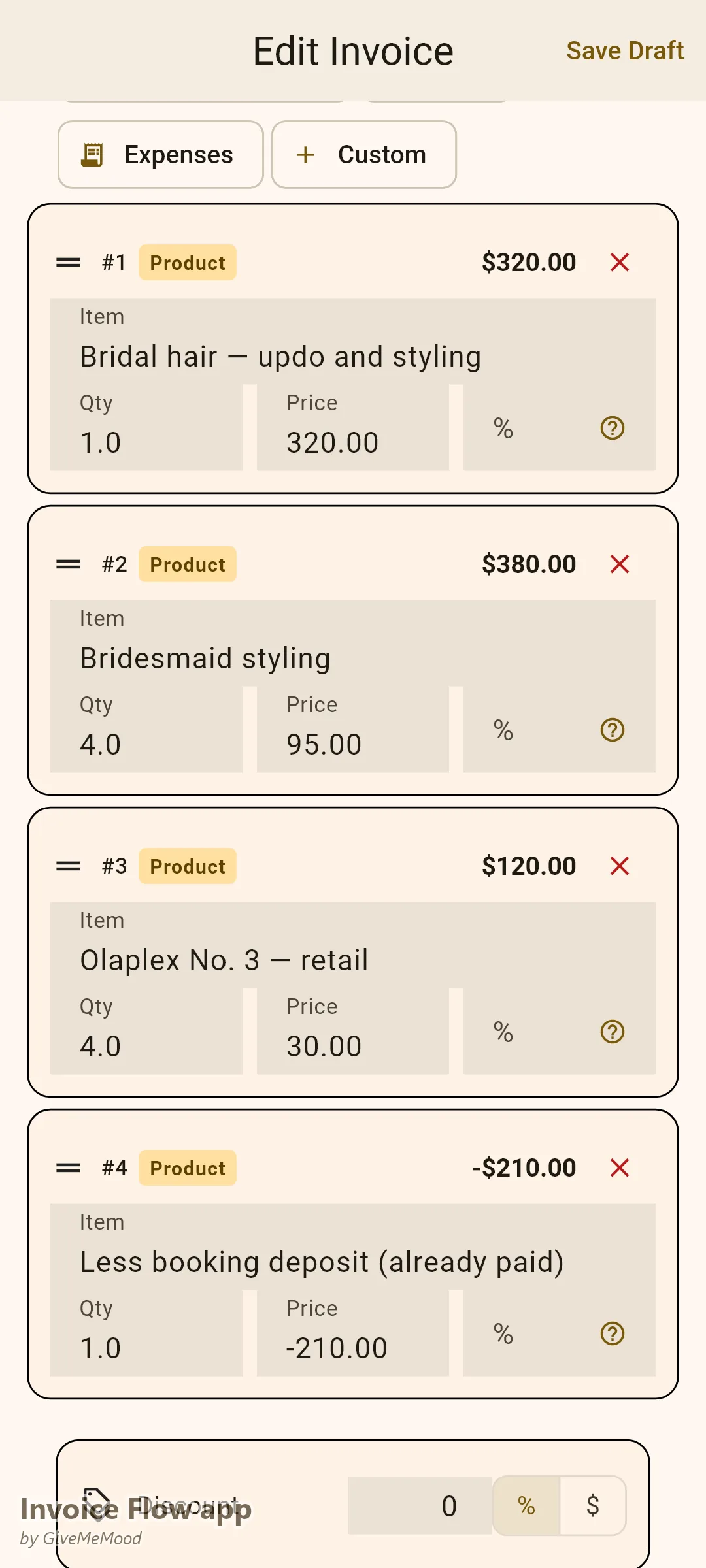
Now the full invoice goes to the bride three weeks before the wedding. It looks like this: Bride — Bridal Updo, veil insert: $280; Maid of Honor — Half Updo: $200; Bridesmaid 1 — Blowout: $160; Bridesmaid 2 — Blowout: $160; Bridesmaid 3 — Half Updo: $200; Bridesmaid 4 — Blowout: $160; Flower Girl — Simple Style: $80; Early Morning — 5:30 AM call time: $75; Travel — Marriott Downtown, 12 miles: $18. Total: $1,333. Deposit Paid: $467. Balance Due Day Of: $866.
The bride sees every person and every service. She shares it with the wedding coordinator. She shares it with her mom. Anyone who asks what they’re paying for can look at the invoice. By the time the morning arrives, there are no questions. I arrive. I do beautiful work. I leave. The balance payment is usually waiting for me in an envelope before I even finish packing up.
Corporate Grooming: A Market I Did Not Know I Could Serve
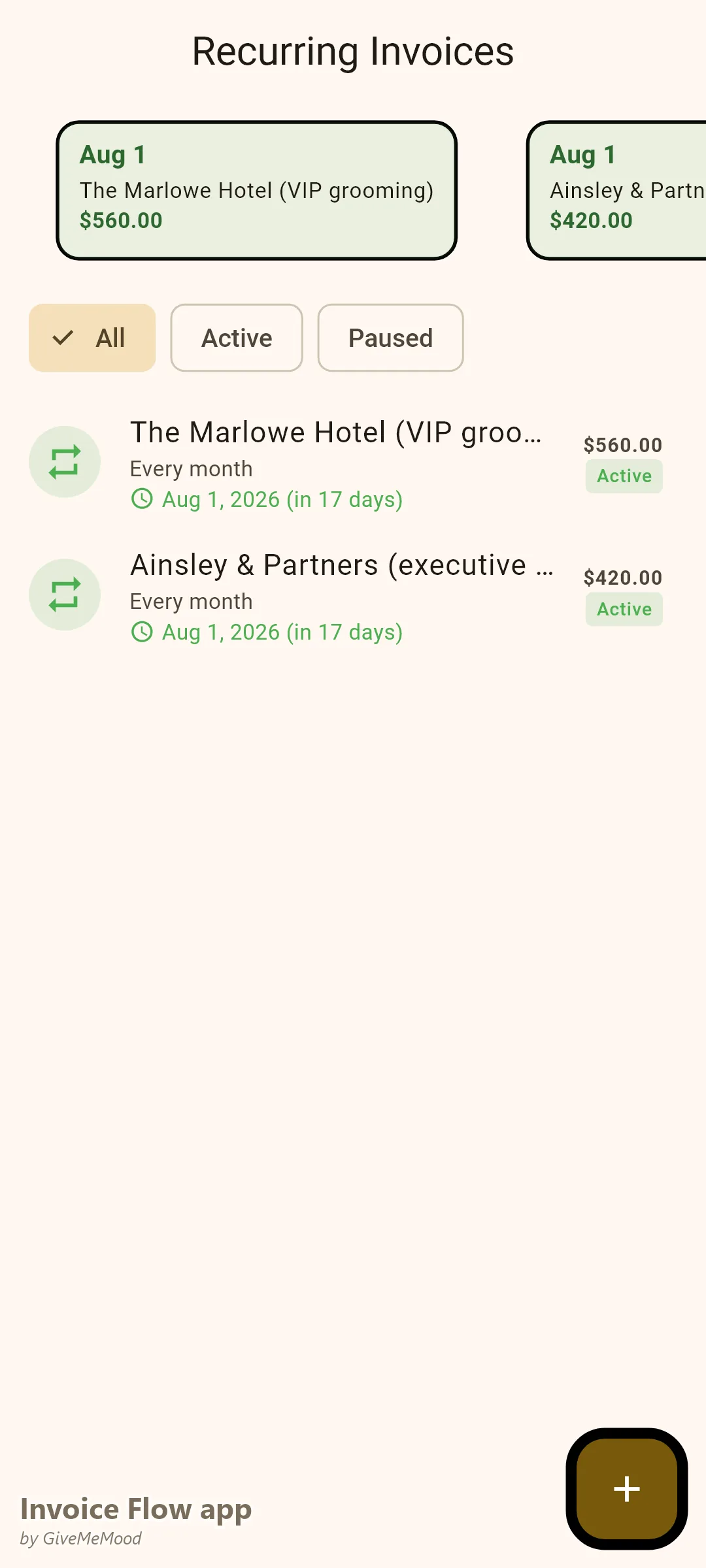
About four years into my bridal work, a corporate event planner called me about providing grooming services at a corporate retreat — blowouts and quick styling for about 25 female executives attending a leadership conference. She found me through a bride I had done the year before.
This was new territory. Corporate clients do not pay cash. They do not pay Venmo. They pay net-30 invoices through accounts payable departments. They need a formal invoice with her company’s event reference code, an invoice number, my business name and tax ID, and payment terms stated explicitly.
I sent them exactly that through InvoiceFlow: On-Site Styling Services — Executive Leadership Retreat, March 14, 2026 — 6 hours: $1,200; Kit and Product Fee: $80; Travel — Sheraton Grand, 8 miles: $14. Total: $1,294. Event Reference: LDR-2026-Q1. Net-30.
They paid on day 24. They booked me again for their fall conference. I now have three corporate clients who call me every quarter for their event grooming programs. This revenue is some of the most reliable I have — these companies budget for it annually, and they come back as long as the service is excellent and the invoicing is easy for their AP department.
Education Workshops: The Income Stream I Almost Left Informal
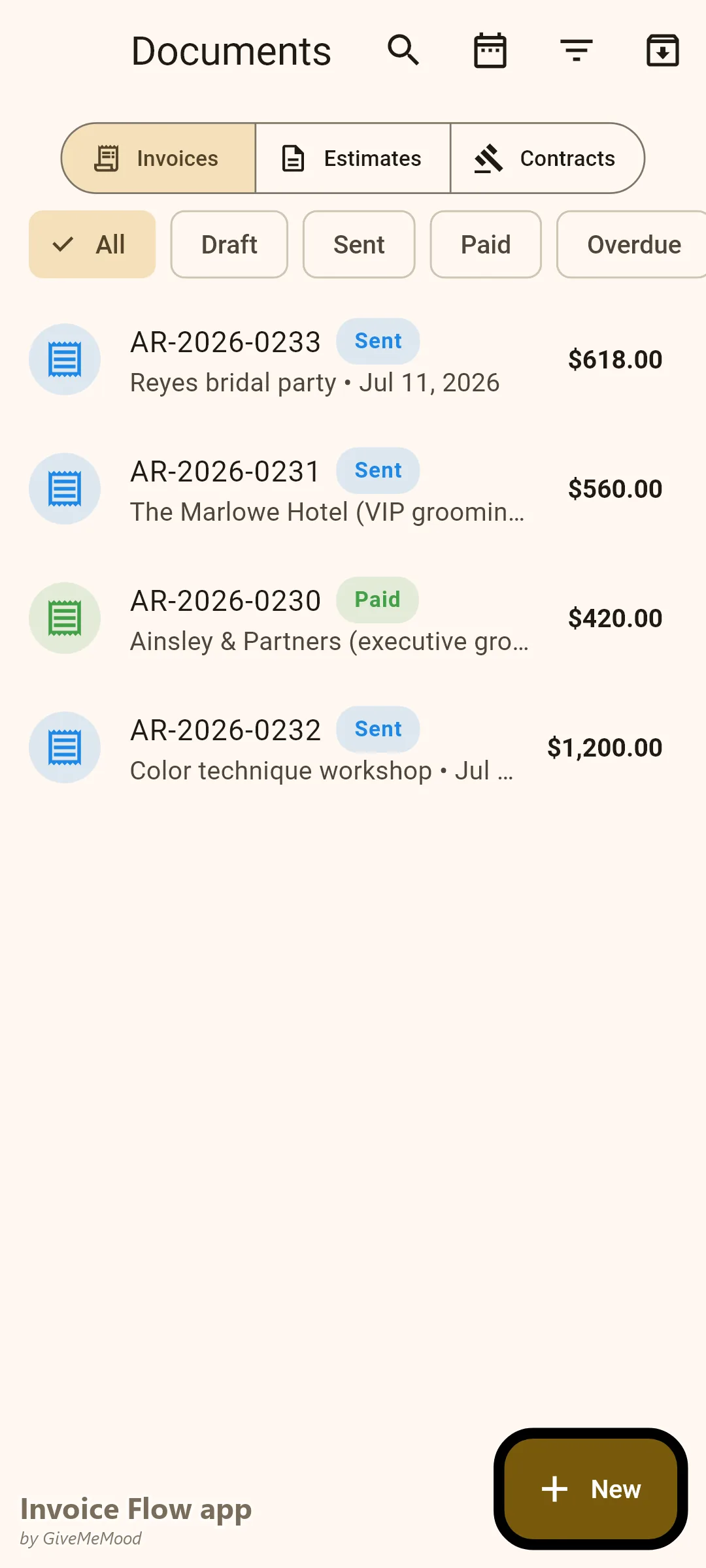
I teach hair workshops twice a year. Advanced braiding techniques. Styling for melanin-rich hair. Bridal updo construction for natural textures. These are full-day workshops, 8-10 students, $250 enrollment each.
Before InvoiceFlow, I collected enrollment payment through Venmo and hoped everyone who signed up would show up. Attendance was unpredictable. I once set up for 10 students and had 6 show up. Four students had “confirmed” by sending the Venmo payment on the day of the event, and two of those four did not show up.
Now enrollment requires a formal invoice: “Advanced Bridal Updo Workshop — Natural Textures, April 12 — Enrollment: $250.” The invoice goes out as soon as someone says they want to register. It has a payment due date two weeks before the workshop. Students who are on the fence either pay by the due date or self-select out. I know my enrollment count well in advance. My last three workshops have had 100% attendance from confirmed registrants.
What the Numbers Look Like Now
I want to share some actual impact, because the vague “everything improved” story is not helpful.
Before professional invoicing: my bridal booking-to-confirmed rate was probably around 65-70%. Brides who consulted with me and then chose someone else or went ghost represented 30-35% of my consultations. My average payment time on non-bridal work was unpredictable. I had no systematic view of what my income was by category.
After professional invoicing: my bridal booking-to-deposit-paid rate is essentially my booking-to-confirmed rate, because the deposit IS the confirmation. Brides who pay the deposit are going to be there on the wedding day. My corporate client average payment time is 22 days on net-30 terms. My workshop attendance rate is 100%. And for the first time, I can see in InvoiceFlow’s analytics exactly what percentage of my revenue comes from bridal, from corporate, and from education.
That breakdown surprised me: my corporate and education revenue together now represent nearly 35% of my annual income — revenue I was treating as bonus income before I had visibility into it.
What I Would Tell the Hairstylist I Was Three Years Ago
I would tell her to stop thinking of invoicing as paperwork and start thinking of it as the first thing she says to a client after “I would love to work with you.” The invoice is the message that says: I am a professional. I value our time equally. I have structured this transaction for both of our protection.
A bride who receives a professional deposit invoice within the hour of your consultation is a bride who knows she is working with someone serious. She is going to show that invoice to her wedding planner, to her photographer, to her mom. And all of them are going to see a professional business.
Download InvoiceFlow. Set up your services. Send the deposit invoice before you leave the consultation. Your future self will thank you — probably within the first two weeks.
Amara Johnson is a master hairstylist and bridal specialist based in Chicago, Illinois, serving the Chicago metropolitan area bridal market and providing corporate event styling and professional education workshops.