 EN
EN  العربية
  Български
  Čeština
  Dansk
Dansk  Deutsch
  Ελληνικά
  Español
  Suomi
Suomi  Français
  עברית
עברית  हिन्दी
  Bahasa Indonesia
  Italiano
  日本語
日本語  한국어
한국어  Bahasa Melayu
  Nederlands
  Norsk
Norsk  Polski
  Português
  Română
  Русский
  Svenska
  Kiswahili
  ไทย
ไทย  Türkçe
  Українська
  Tiếng Việt
  中文
中文 InvoiceFlow for Fine Artists: The Business Side of Your Art Career
Why Fine Artists Need Professional Billing
The fine art world is one of the last creative industries where many practitioners resist treating their work as a business — with financially painful consequences. Whether you sell original paintings, sculptures, limited edition prints, or commission custom pieces, professional billing isn’t a compromise of artistic integrity: it’s the foundation of a sustainable practice.
Fine artists have surprisingly diverse revenue streams: gallery sales, direct commissions, art fair sales, licensing (prints, merchandise, digital use), teaching, residency fees, public art grants, corporate art consulting, and online sales. Each revenue type has different invoice structures, different buyer expectations, and different tax implications. Without a system that handles all of these, income is undertracked and undercollected.
Key Pain Points for Fine Artists
- No system for tracking commissioned artwork payments — 50% upfront, 50% on delivery
- Gallery consignment arrangements mixed up with direct sales
- Art licensing fees informally negotiated with no invoice documentation
- Teaching and workshop income not properly invoiced
- No record of which clients own which works (important for resale right tracking)
- Cash-only sale culture at art fairs with no income tracking for tax
How InvoiceFlow Solves It
Commission Billing with Deposit Structure
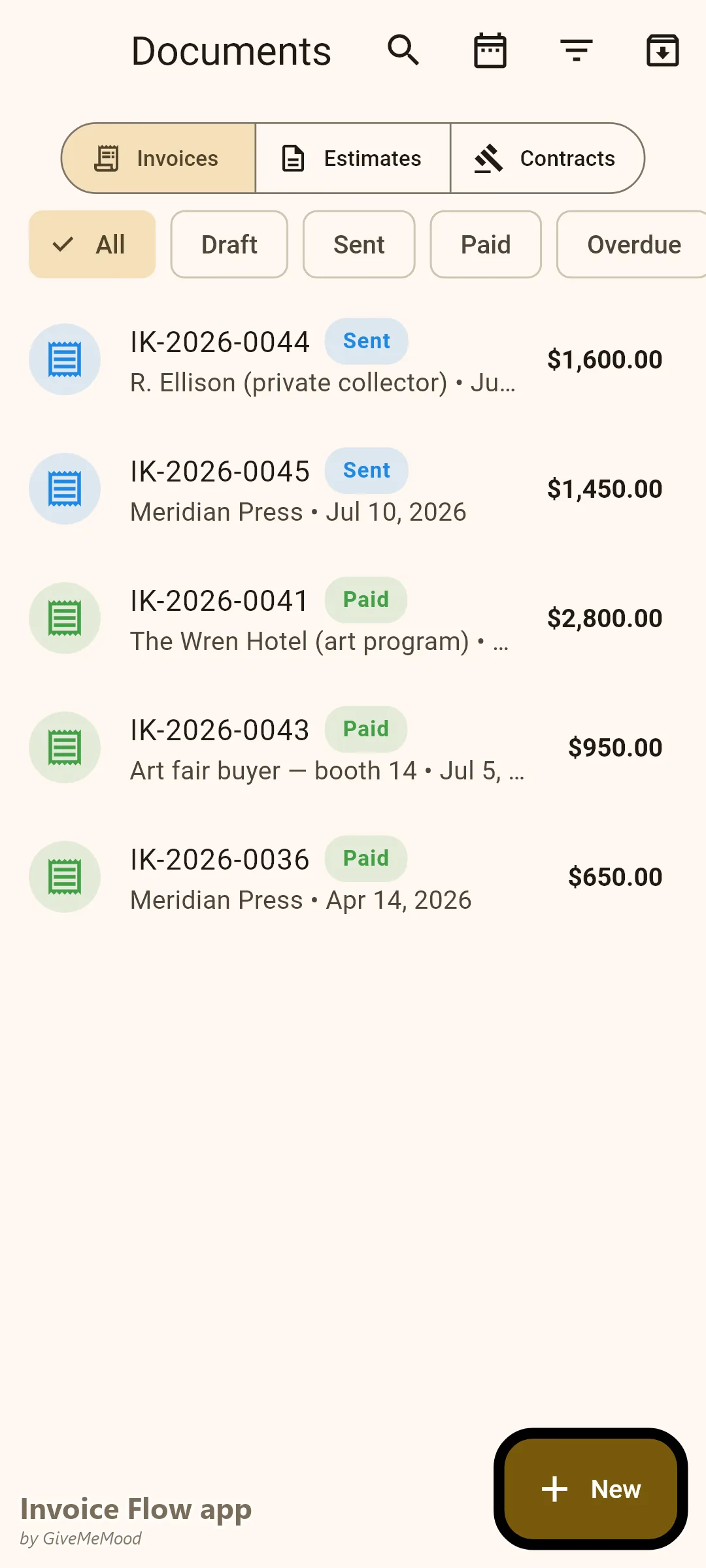
When accepting a commission, create an invoice with the agreed total. Issue a Proforma Invoice for the 50% deposit (or whatever advance is agreed). Record when received. The piece status goes to “In Progress” in your mind and “Partially Paid” in InvoiceFlow. On delivery, issue the final invoice for the remaining balance. You have a complete, professional record of every commissioned work.
Licensing and Print Rights Invoices
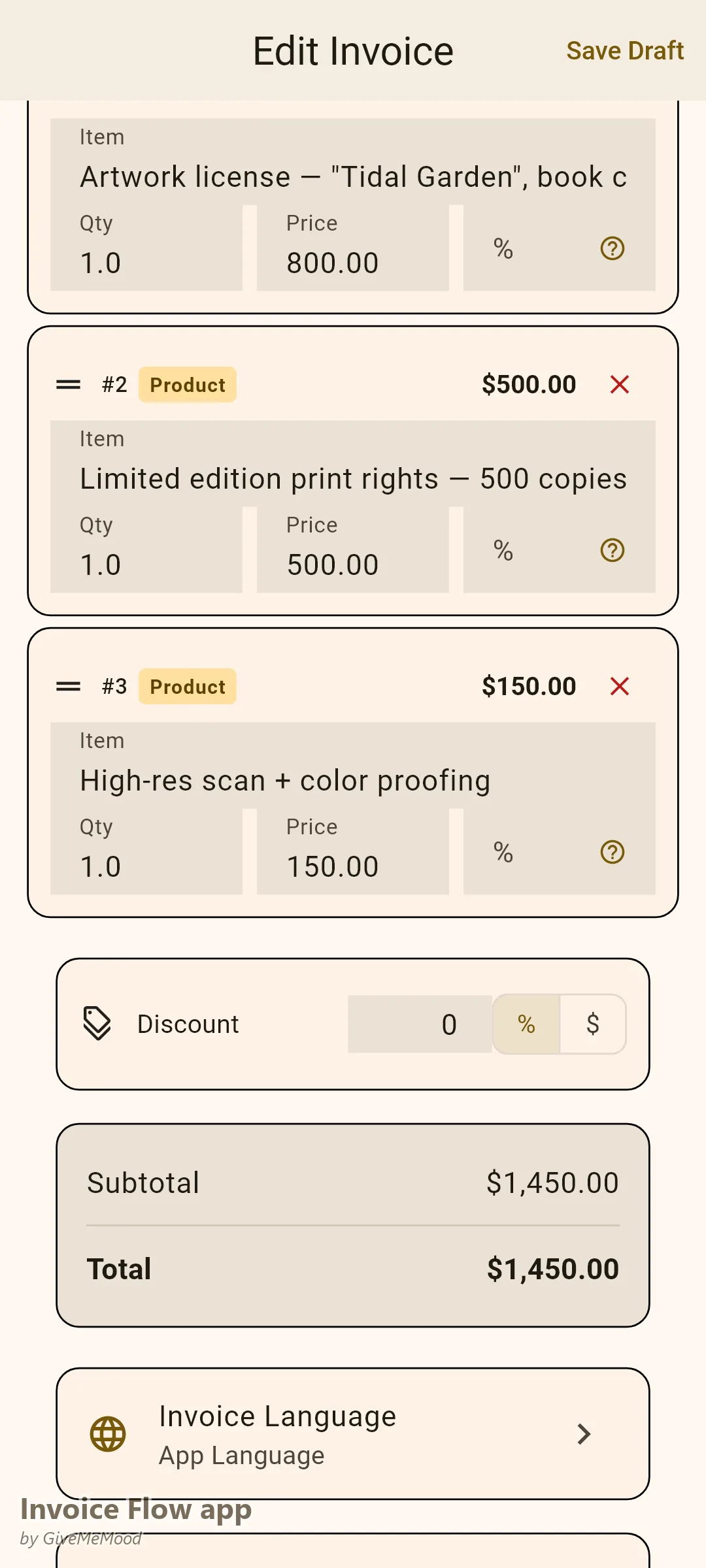
When a company or publisher wants to license your artwork for merchandise, advertising, or publications, create a detailed license invoice: “Artwork License — Limited Edition Print Rights, 500 copies, 2 years: $800.” The license terms are documented in the line item and custom fields. Your licensing income is tracked separately from original work sales.
Workshop and Teaching Income
Running art workshops? Use recurring invoices for regular class fees or create individual invoices per workshop. Build workshop types in your product library: “Oil Painting Workshop — Half Day (5 participants): $250/person,” etc.
Art Fair Sales Receipts
At art fairs, if buyers request a receipt (and they often do for insurance or tax purposes), open InvoiceFlow, create a quick sale invoice, and send the PDF to their email on the spot. Professional, immediate, and tracked in your income records.
Analytics for a Sustainable Art Practice
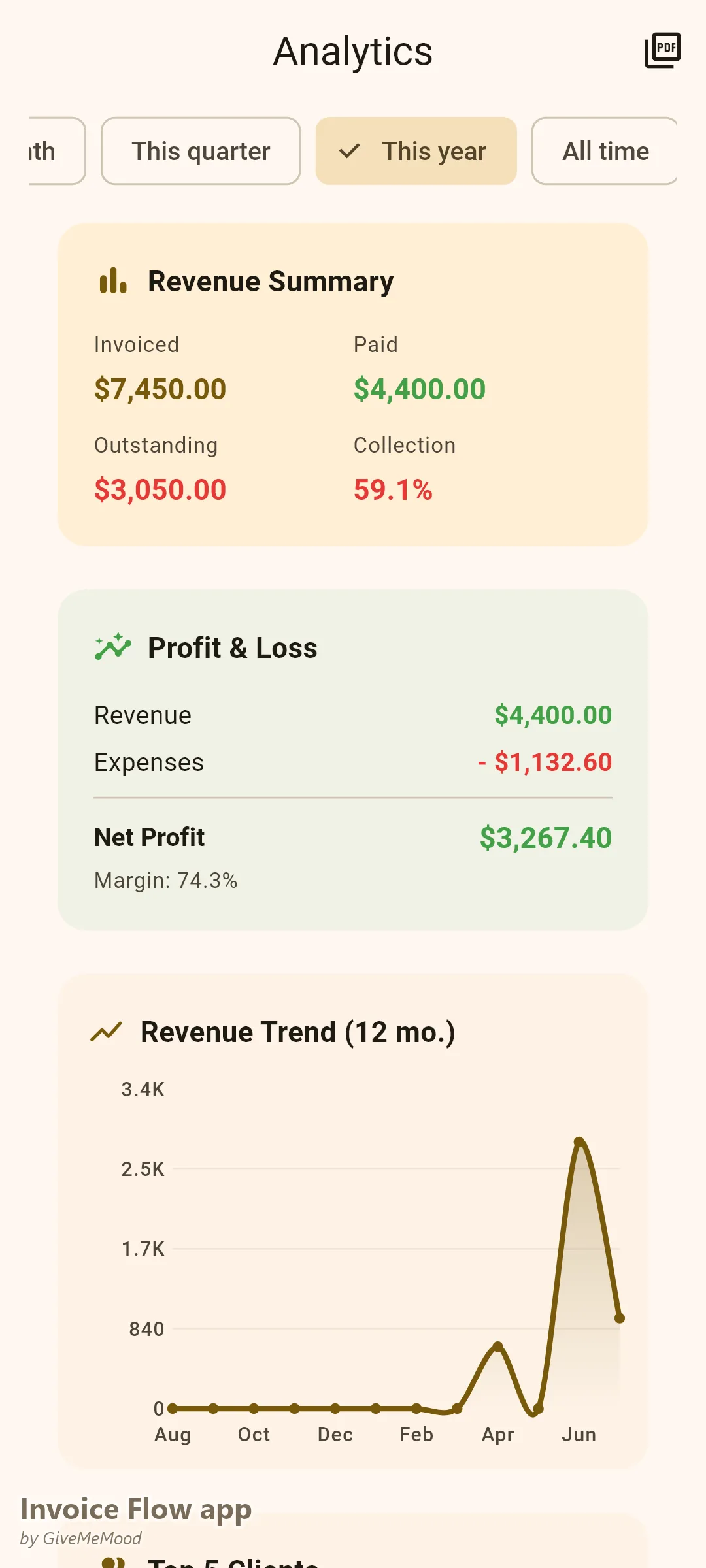
InvoiceFlow’s Profit & Loss report shows your art income vs. your expenses (materials, studio rent, art fair fees, shipping). Knowing your actual profitability by income type (commissions vs. gallery vs. online vs. licensing) shapes your business strategy. The data might reveal that gallery commissions eat 50% of your earnings while direct commissions are 100% retained.
Your Workflow with InvoiceFlow
-
Commission accepted: Issue deposit invoice. Client pays. Work begins.
-
Artwork delivered: Issue final invoice. Record full payment. Client has a professional receipt for the original work with dimensions, title, and medium documented.
-
Licensing inquiry: Issue detailed license invoice with clear terms. Client signs off. You have a documented licensing agreement on record.
-
Art fair day: Buyer wants a receipt. Create invoice on your phone. Send to their email. Done in 90 seconds.
-
Year-end review: Analytics shows total income by type. Clean data for tax.
Most Valuable Features for Fine Artists
- Split Payment Tracking — Deposit and delivery balance for commissions
- License Invoice Structure — Art licensing rights documentation
- Product Library — Artwork types, workshop formats, license options pre-built
- Analytics — Revenue by income stream (commissions, sales, licensing, teaching)
- Mobile Invoicing — Art fair receipts generated on your phone
- Custom Fields — Artwork dimensions, medium, and title for provenance record
Real Example: Anna’s Art Practice Becomes Financially Sustainable
Anna is a painter who sells originals, accepts commissions, and runs quarterly workshops. Before InvoiceFlow her income tracking was a mess of bank transfers, cash, and PayPal receipts. She often forgot to follow up on commissions in progress. With InvoiceFlow her commissions are tracked from deposit to delivery. Her workshops are invoiced properly. Her licensing fees are documented. At year-end, her accountant received a clean CSV instead of a box of receipts. Her commission completion rate improved because deposits are tracked and the social contract of payment is formalized.
Getting Started
Download InvoiceFlow free on Android. Build your artwork and service library, create your first commission invoice, and start tracking every sale today.