
 EN
EN  العربية
  Български
  Čeština
  Dansk
Dansk  Deutsch
  Ελληνικά
  Español
  Suomi
Suomi  Français
  עברית
עברית  हिन्दी
  Bahasa Indonesia
  Italiano
  日本語
日本語  한국어
한국어  Bahasa Melayu
  Nederlands
  Norsk
Norsk  Polski
  Português
  Română
  Русский
  Svenska
  Kiswahili
  ไทย
ไทย  Türkçe
  Українська
  Tiếng Việt
  中文
中文 Why I Stopped Chasing Per-Day Rates and Built a Training Retainer Practice
By Patricia Holloway, Corporate Trainer & Leadership Development Consultant — Charlotte, NC
I spent seven years as a per-day corporate trainer. I would quote a day rate, show up, deliver, invoice, and wait. Sometimes I’d get another call from that client. More often, I wouldn’t. The income was good when the phone rang and nonexistent when it didn’t.
In 2022, I calculated what those seven years had actually produced. I had worked with 140 different client organizations. Of those, 38 had used me more than once. The other 102 had hired me for one engagement and vanished. I had done all the relationship-building work — the proposal, the pre-training needs assessment, the customization, the delivery — and captured one event worth of revenue from 73% of my clients.
The problem wasn’t my training. The feedback was consistently strong. The problem was my billing model. I was billing like a one-time vendor when I should have been billing like a retained partner.
The Incident That Changed My Thinking
I was working with a regional bank — a compliance training engagement, three days of delivery across their branch network, $4,800 total. Good client. Organized L&D department. I delivered, invoiced, waited. Net-30 arrived.
Eighteen months later, they called again for management development training. Six days across two cohorts, $9,600.
Between those two engagements: nothing. Eighteen months of no revenue from a client who clearly valued the work. I had built zero mechanism to maintain that relationship as a billing relationship.
I asked the L&D director after the second engagement why they’d waited so long. She said: “We didn’t really have you in our vendor system in a recurring way. When we need something, we go find who did it last time. It took us a while to remember to call you.”
She didn’t mean it as a critique. But I heard it as one.
Building the Retainer Model
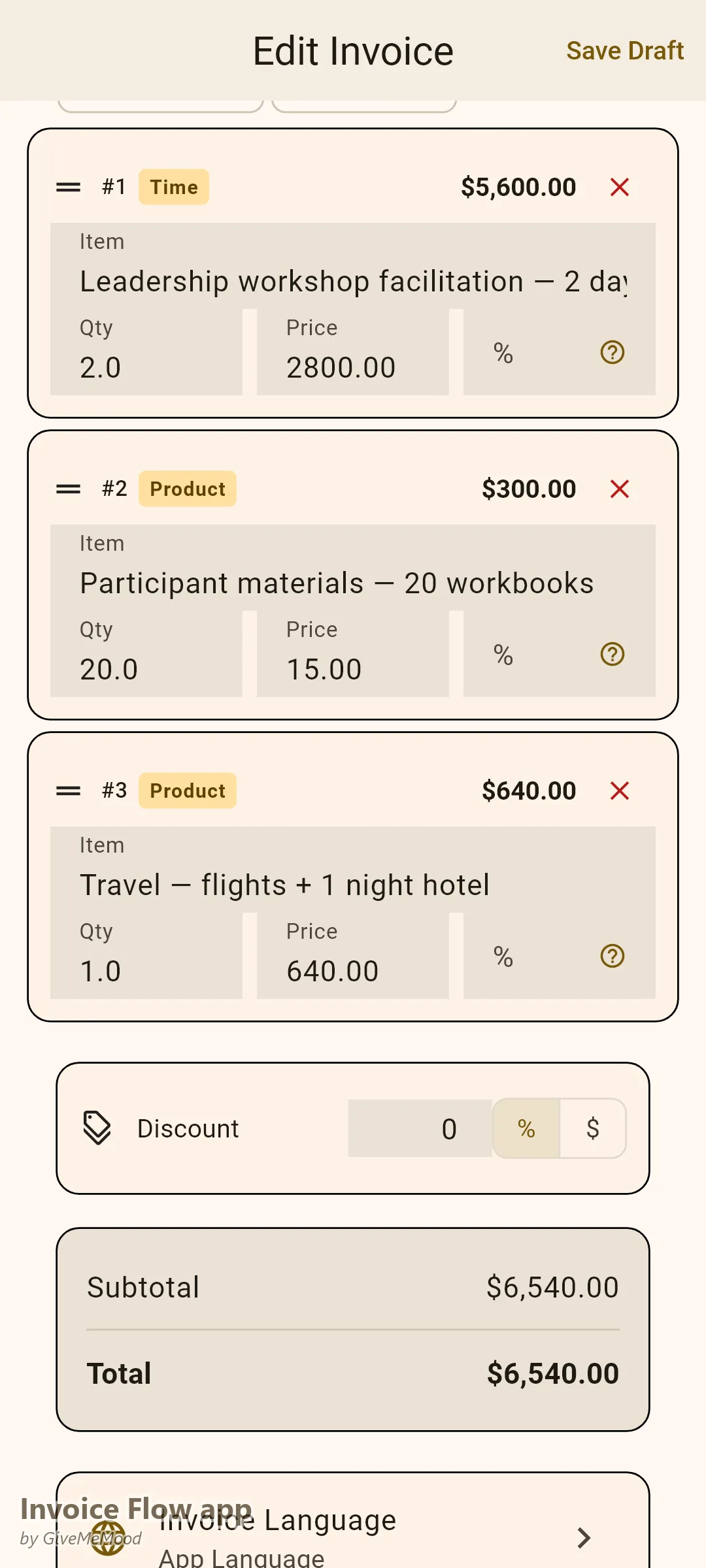
I spent three months restructuring my practice around retained client relationships. The core offer:
Monthly Training Retainer Tiers:
- Essentials Retainer — $2,400/month: 2 training days per month, quarterly strategy session, curriculum updates on request
- Growth Retainer — $4,200/month: 4 training days per month, monthly strategy session, curriculum customization, post-training reports
- Enterprise Retainer — $7,500/month: 8 training days per month, weekly check-in, full program design, multi-cohort delivery, executive coaching hours
The pitch to existing clients: instead of calling us when you remember to, make us part of your L&D infrastructure. Predictable budget line. Guaranteed availability. Cumulative program development instead of one-off events.
The first client I pitched — a manufacturing company I’d delivered two separate engagements for — signed the Growth Retainer immediately. Their L&D manager said she’d been trying to justify a dedicated training budget to her CFO for a year. A fixed monthly retainer was easier to get approved than variable project invoices.
The Retainer Invoice Structure
I set up monthly recurring invoices in InvoiceFlow for each retained client. The invoice structure is clear and consistent:
“Monthly Training Retainer — [Company Name] — [Month Year]: Retainer Tier: Growth Retainer Included: 4 training days, monthly strategy session, curriculum support Training scheduled this month: Leadership Communication (April 8), Performance Management (April 22) Monthly fee: $4,200.00 Invoice auto-generated: 1st of each month Payment Terms: Net-15”
InvoiceFlow generates and sends the retainer invoice on the first of each month. The client sees exactly what training is scheduled, what’s included, and what they owe. No confusion, no renegotiation.
Project Engagement Invoices for New Clients

New clients still often start with a project engagement before converting to a retainer. I use a three-phase milestone billing structure for projects over $5,000:
“Leadership Development Program — [Company Name] — [Date]: Program: Front-Line Manager Development — 12-Session Series Total program fee: $14,400.00 Phase 1 (Needs Assessment + Curriculum Design, 30%): $4,320.00 — due at contract signing Phase 2 (Delivery — Sessions 1-6, 40%): $5,760.00 — due at Session 6 delivery Phase 3 (Delivery — Sessions 7-12 + Final Report, 30%): $4,320.00 — due at program completion”
The three-phase structure protects both parties. The client doesn’t pay everything upfront. I don’t deliver everything before receiving a penny.
Half-Day and Single Session Invoices
Not every engagement is multi-day. Keynote presentations, half-day workshops, and single-session lunch-and-learns invoice differently:
“Training Session — [Company Name] — [Date]: Service: Half-day Leadership Workshop Topic: Effective Communication for Managers Duration: 4 hours | Delivery: On-site, [Location] Session fee: $1,800.00 Travel (mileage 68 miles × $0.67): $45.56 Materials (printed workbooks, 24 copies): $120.00 Total: $1,965.56 Payment Terms: Net-30”
Travel and materials documented as line items prevent disputes. Clients who ask questions about the total can see exactly what they’re paying for.
Train-the-Trainer Licensing Invoices
Some clients want to bring training in-house. Train-the-trainer programs require a different invoice structure:
“Train-the-Trainer Program — [Company Name] — [Date]: Program: Facilitation Skills for Internal Trainers Format: 2-day intensive + materials license Participants: 6 internal trainers Training fee: $5,400.00 (2 days × $2,700/day) Materials license (internal use only, non-transferable): $1,800.00 Total: $7,200.00 License terms: Internal use only. License does not authorize delivery to external clients or third-party use. Payment Terms: Net-30”
The license terms on the invoice create a documented record of the internal-use restriction. This matters if the client later trains other companies using my curriculum — the invoice is the usage agreement.
The Practice After Two Years on Retainer Model
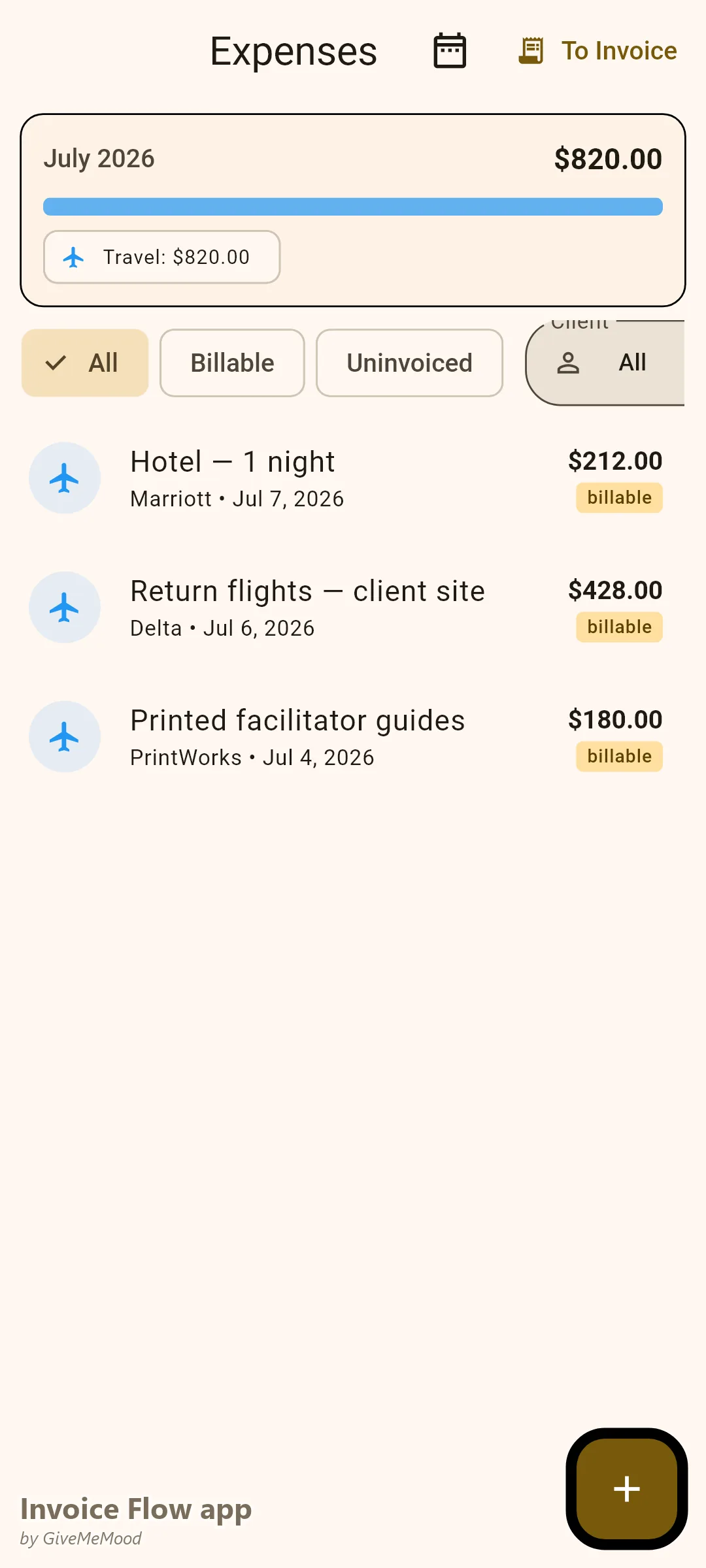
Numbers after restructuring from project to retainer model:
- 5 active monthly retainers: $2,400 + $4,200 + $4,200 + $7,500 + $7,500 = $25,800/month recurring
- Project engagements (new clients entering the pipeline): approximately $6,000-$8,000/month
- One-time sessions and keynotes: approximately $2,400/month
- Train-the-trainer programs: approximately $1,500/month average
Total monthly revenue: approximately $35,700–$37,700/month, compared to an average of $11,200/month in the variable project model.
The difference isn’t that I’m working more. I’m working approximately the same number of days. The difference is that five clients now guarantee baseline income, and I use the project pipeline for growth rather than for survival.
What Changed in Billing Specifically
Before InvoiceFlow, I tracked retainer clients in a spreadsheet and invoiced manually each month. I missed a billing cycle twice in one year — not because the clients didn’t owe me, but because I forgot to send the invoice while managing delivery. Those two missed cycles cost me $8,400 that I eventually recovered but only after awkward “I forgot to invoice you” conversations.
Now InvoiceFlow auto-generates the retainer invoices on the first of the month. I review and send. The clients receive a consistent invoice on a predictable schedule. The process requires five minutes instead of thirty, and I haven’t missed a cycle in eighteen months.
What InvoiceFlow Does for Corporate Trainers
Corporate training billing touches multiple invoice types simultaneously: monthly recurring retainers with scheduled training details, project engagements with milestone billing, one-day and half-day sessions with travel and materials line items, train-the-trainer programs with license documentation, and corporate PO fields for finance department compliance.
InvoiceFlow handles all of these from one Android app: recurring invoices auto-generated on schedule, custom fields for PO numbers and training documentation, multi-line itemization for travel and materials, and split payment structures for large program contracts.
Download InvoiceFlow. Build your retainer tiers. Approach your three most recent repeat clients about a monthly structure. The same training you deliver per-day becomes the foundation of a predictable, professional practice.
Patricia Holloway is a corporate trainer and leadership development consultant in Charlotte, North Carolina, providing management development, compliance training, facilitation skills programs, and leadership coaching for regional and national organizations.