 EN
EN  العربية
  Български
  Čeština
  Dansk
Dansk  Deutsch
  Ελληνικά
  Español
  Suomi
Suomi  Français
  עברית
עברית  हिन्दी
  Bahasa Indonesia
  Italiano
  日本語
日本語  한국어
한국어  Bahasa Melayu
  Nederlands
  Norsk
Norsk  Polski
  Português
  Română
  Русский
  Svenska
  Kiswahili
  ไทย
ไทย  Türkçe
  Українська
  Tiếng Việt
  中文
中文 How I Turned My Delivery Side Hustle Into a Real Business with Professional Invoicing
By Priya Sharma, Courier & Last-Mile Delivery Owner — Phoenix, AZ
I started making deliveries on evenings and weekends while working a warehouse job. Medical supplies, documents, small packages — anything that needed same-day or next-day delivery in the Phoenix metro area. By the end of my first year, I had enough volume that I quit the warehouse job.
The business grew through referrals. A law firm sent me their daily document runs. A medical equipment supplier started using me for urgent hospital deliveries. A small e-commerce operation hired me to handle their local orders. I was busy, my clients were happy, and I was making significantly less money than the volume suggested I should be.
The problem was billing.
The Billing Reality for a Growing Courier
For the first two years, my billing was a weekly ritual I dreaded. On Sunday evenings, I would sit down with a notebook and try to reconstruct the week’s deliveries from memory, text messages, and whatever scraps I had saved. I would invoice each client for an approximate total, usually undershooting because I could not remember every stop.
The specific problems:
Per-delivery vs. account billing confusion. Small individual clients paid per delivery, usually cash or Venmo. Corporate clients expected a weekly or monthly invoice. I had no formal system for distinguishing these, so corporate clients sometimes got per-delivery invoices and sometimes got nothing until they asked.
Route billing inaccuracy. For multi-stop routes, I was invoicing by route rather than by stop, which meant I was undercharging on longer routes and sometimes overcharging on shorter ones. Neither was intentional — both were the result of eyeballing.
No fuel surcharge tracking. I drove approximately 2,400 miles per week. Fuel was my biggest variable cost. I had no systematic way to pass any portion of fuel cost increases to clients.
Lost time charges. If I arrived at a pickup and the package was not ready, or if the recipient was unavailable at delivery, I was waiting without any mechanism to charge for it.
The Corporate Account Billing System
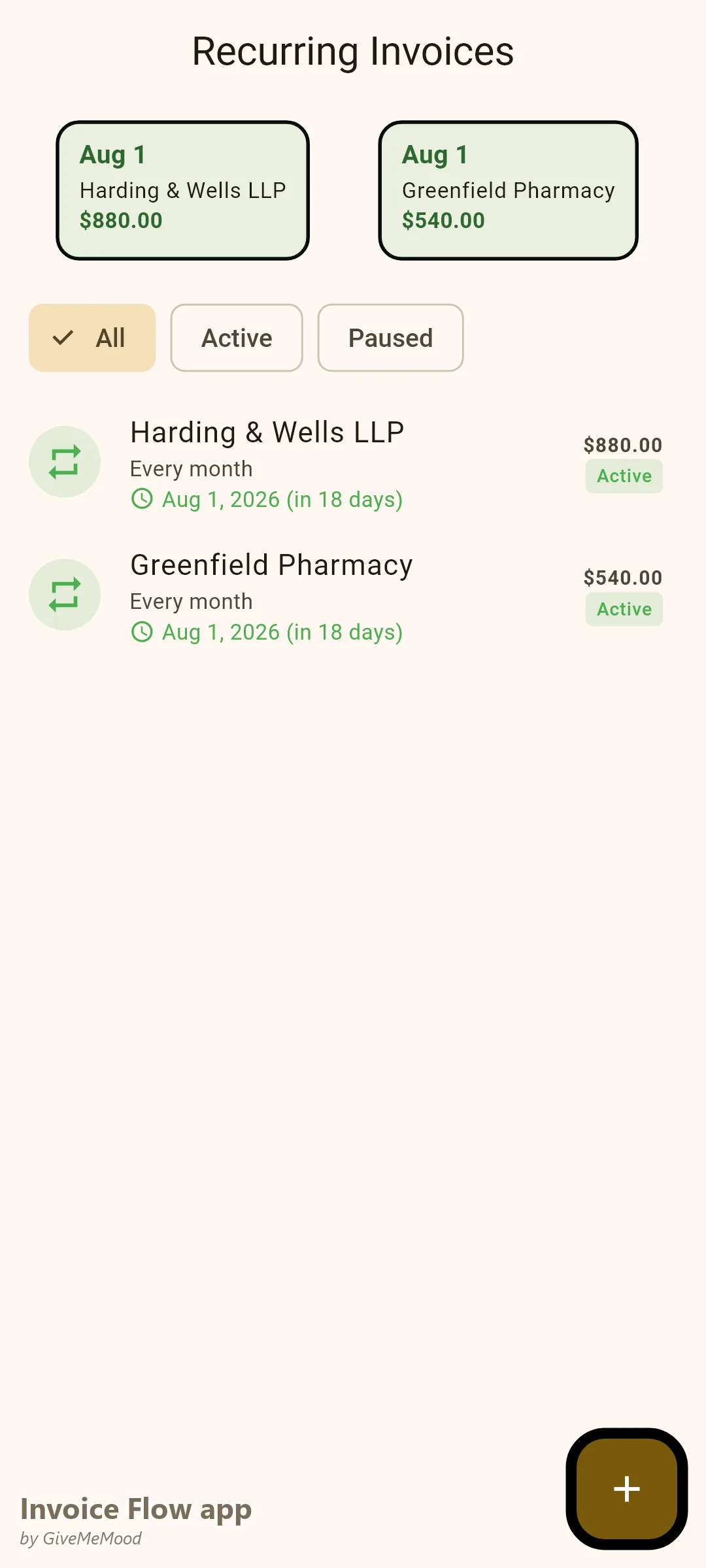
The law firm client was the breakthrough. After several months of ad-hoc invoicing, their office manager called to tell me they needed a proper weekly invoice to process through their accounts payable system. They had been sitting on $840 in payments they could not process because my invoices did not match their format requirements.
I used InvoiceFlow to set up the weekly invoice they needed:
“Courier Services — [Law Firm Name] — Week of June 2-6, 2026:
Monday June 2: Document delivery, 3 stops (courthouse, county recorder, client office): $47.00 Tuesday June 3: Urgent contract delivery, downtown to Scottsdale: $38.00 Wednesday June 4: Document delivery, 4 stops (same circuit): $56.00 Thursday June 5: Emergency filing, courthouse: $42.00 Friday June 6: End-of-week document run, 5 stops: $65.00
Weekly subtotal: $248.00 Fuel surcharge (8% — current fuel cost adjustment): $19.84 Total due: $267.84 Payment Terms: Net-7”
The law firm’s office manager processed it the same day. They paid within three days. They have been on this format ever since.
Building the Rate Structure
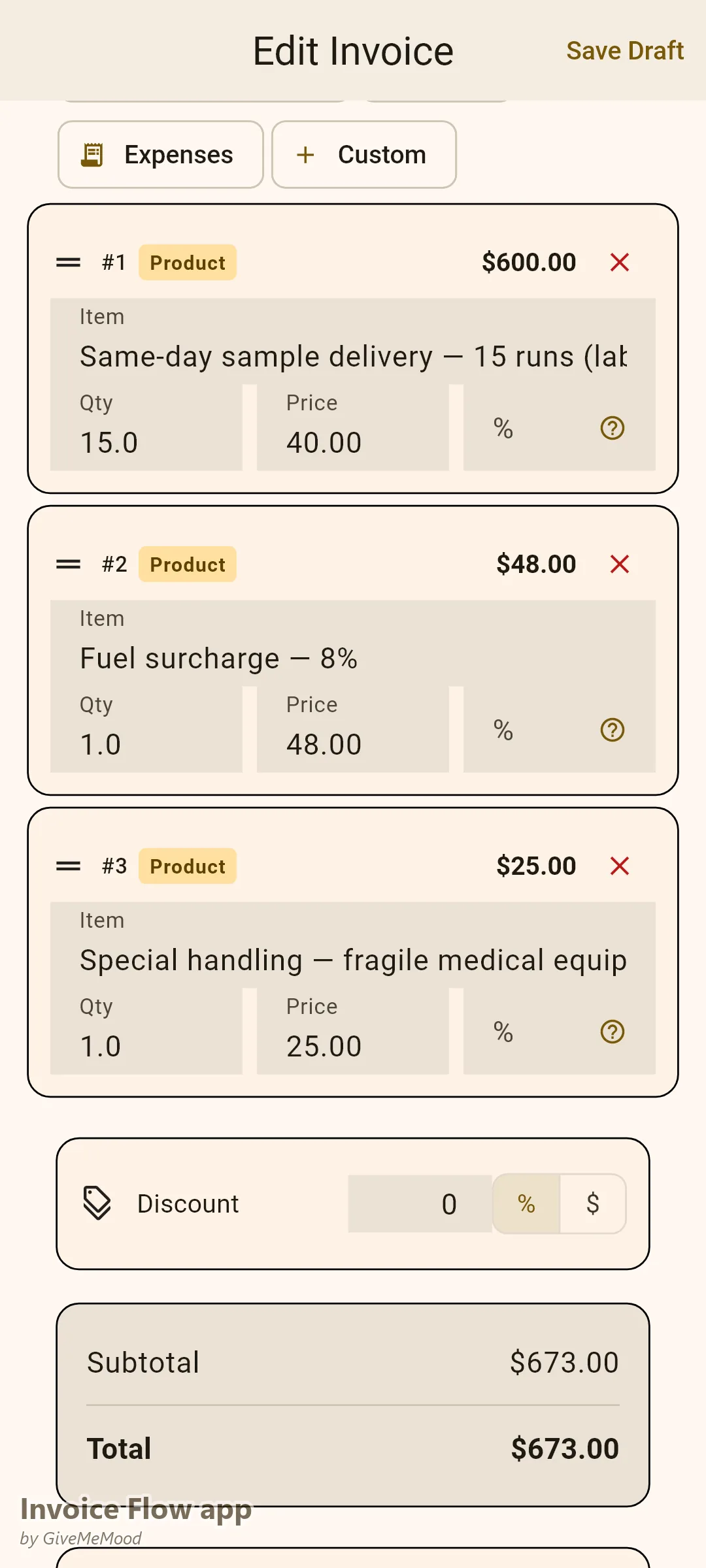
Once I had the corporate billing system working, I formalized my rate structure in InvoiceFlow’s service catalog:
- Base delivery rate (same-day, single stop): $18.00
- Additional stop (same route): $10.00 per stop
- Rush delivery (under 2 hours): $35.00 base
- After-hours delivery (after 6 PM): $28.00 base + $12.00 surcharge
- Medical/pharmaceutical delivery (priority): $45.00 base
- Waiting time (beyond 10 minutes at pickup or delivery): $15.00 per 15 minutes
- Fuel surcharge: 8% of delivery total (adjusted quarterly based on average fuel cost)
Having these as pre-built line items means every invoice is consistent. Clients know what they will be charged before they ask. The waiting time charge in particular changed client behavior: pickups were ready when I arrived.
Medical Supply Account: Documentation Requirements
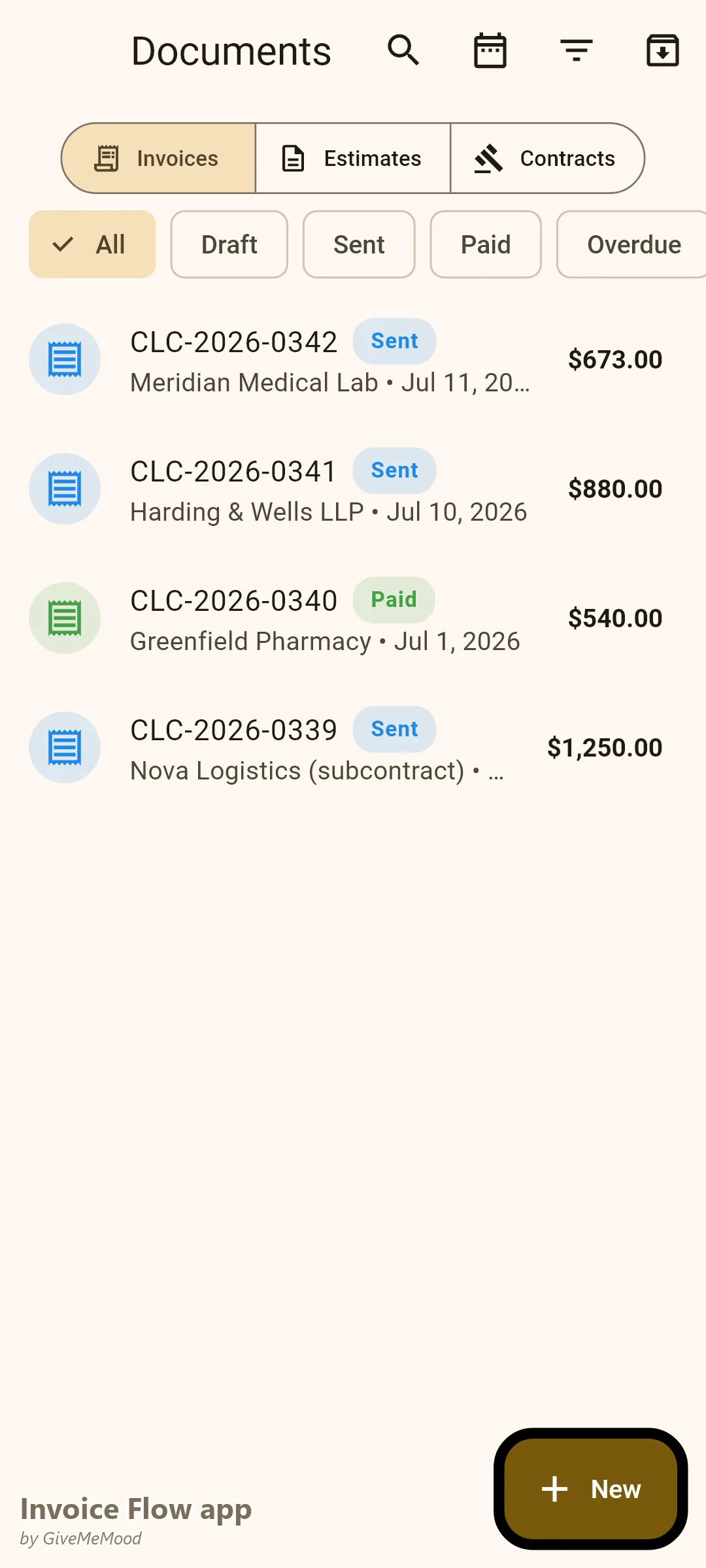
My medical equipment client had specific requirements I had not encountered before. Their accounts payable department required every invoice to include: client reference number, delivery confirmation (signature of recipient), and description of goods transported.
I added custom fields in InvoiceFlow for this client:
“Medical Equipment Delivery — [Supplier Name] — Invoice #MED-2026-0841: Client Reference: MED-SVC-2026-PRX-041 Delivery Date: June 5, 2026 Recipient: Valley Medical Center, Receiving Dept. — Signature on file (BOD #VMC-06-05) Description: Portable patient monitoring equipment, non-fragile, temperature-stable Delivery Address: 1400 N. 12th St., Phoenix, AZ 85006 Base Delivery: $45.00 Medical priority surcharge: $15.00 Total: $60.00 Payment Terms: Net-15”
The reference number and delivery confirmation fields made the invoice processable by their AP department without follow-up. My payment lead time dropped from 30+ days to 12 days.
E-Commerce Local Delivery Batching
My e-commerce client sends me batches of 8-15 local orders several days per week. Rather than invoicing each delivery individually, I send a daily batch invoice:
“E-Commerce Delivery Batch — [Store Name] — June 6, 2026: Order #E001 — [Address]: $14.00 Order #E002 — [Address]: $14.00 Order #E003 — [Address]: $16.00 (extended zone) Order #E004 — [Address]: $14.00 Order #E005 — [Address]: $14.00 […] 12 deliveries total: $174.00 Fuel surcharge (8%): $13.92 Total: $187.92”
The client can match each line item to their order records. Any delivery issues are easy to identify and resolve.
The Results at Three Years
Three years after going full-time:
- Four corporate accounts generating $3,200-$4,100/month in predictable weekly and monthly billing
- Fuel surcharge applied consistently — passing on approximately $180-$220/month in variable fuel costs
- Waiting time charges collected on approximately 60% of qualifying stops — significantly improved client pickup readiness
- Average payment time: 9 days from invoice date (was 35+ days with informal billing)
- Annual revenue up 45% without adding vehicle capacity — purely from billing accurately and consistently
Download InvoiceFlow. Build your rate catalog. Set up weekly recurring invoice templates for your corporate accounts. Invoice every delivery before you get back in the vehicle.
Priya Sharma is the owner of Sharma Courier & Delivery in Phoenix, Arizona, providing same-day courier, medical supply delivery, and last-mile e-commerce delivery across the Phoenix metro area.