
 EN
EN  العربية
  Български
  Čeština
  Dansk
Dansk  Deutsch
  Ελληνικά
  Español
  Suomi
Suomi  Français
  עברית
עברית  हिन्दी
  Bahasa Indonesia
  Italiano
  日本語
日本語  한국어
한국어  Bahasa Melayu
  Nederlands
  Norsk
Norsk  Polski
  Português
  Română
  Русский
  Svenska
  Kiswahili
  ไทย
ไทย  Türkçe
  Українська
  Tiếng Việt
  中文
中文 The Load That Taught Me to Never Invoice from Memory Again
By Marcus Webb, Owner-Operator, Long-Haul Trucking — Memphis, TN
I have been running my own truck for eleven years. For the first seven of those years, I invoiced freight the way most small operators do: at the end of the week, from notes I had scrawled on napkins and dispatch printouts, with fuel surcharges I calculated in my head and detention fees I sometimes forgot to include entirely.
The model worked until it did not. A load dispute in the spring of 2021 cost me $1,200 I could document I was owed and could not prove clearly enough to collect. That was the last time I invoiced from memory.
What the Old System Was Actually Costing Me
Before I changed anything, I sat down and tried to figure out what informal billing was costing me annually.
The categories I could identify:
Missing fuel surcharges. The fuel surcharge on a load is calculated as a percentage of the linehaul rate based on the current Department of Energy average diesel price. This changes weekly. I was sometimes applying the right surcharge, sometimes the wrong one, and occasionally not applying one at all when I was in a hurry. Across dozens of loads per month, the errors compounded.
Detention fees not documented. When a receiver or shipper holds your truck beyond the free time, you are entitled to detention pay. My contracts allowed $75/hour after two free hours. But documenting detention requires a timestamp when you arrived, a timestamp when loading or unloading began, and often a written confirmation from the dock. I was not collecting this consistently. I estimate I left $4,000-$6,000 per year in undocumented detention.
Accessorial charges absorbed. Lumper fees, extra drops, oversize permits, TWIC card fees, hazmat placarding — these are all legitimate charges I was supposed to pass through to the broker or shipper. Without a formal invoice structure, I absorbed many of them.
When I added it up, I was losing $8,000-$12,000 annually to billing gaps. On a solo owner-operator income, that is a significant percentage of net.
The Invoice Structure I Built
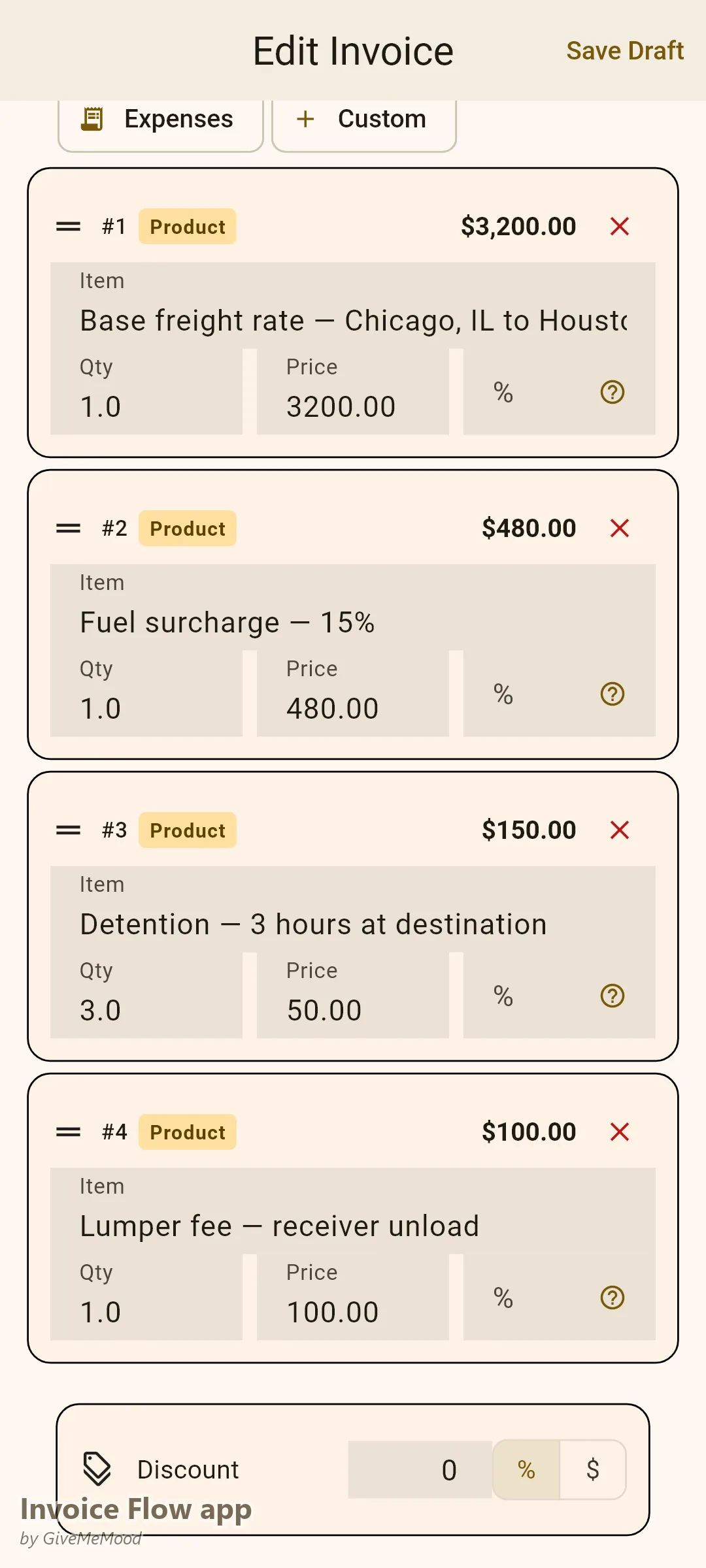
After the 2021 dispute, I rebuilt my invoicing using InvoiceFlow. The new freight invoice for every load:
“Freight Invoice — Marcus Webb Trucking — Load #MWT-2026-0341: Shipper: [Shipper Name] | Receiver: [Receiver Name] Pickup: Memphis, TN | Delivery: Atlanta, GA | Miles: 387 Pickup Date: June 3, 2026 | Delivery Date: June 4, 2026 Pro/BOL #: BOL-2026-MEM-ATL-001
Linehaul Rate: $2.85/mile × 387 miles: $1,103.00 Fuel Surcharge: 12.5% of linehaul (DOE diesel $4.18/gallon, week of June 1): $137.88 Detention at Receiver — Atlanta DC (2 free hours exceeded by 3.5 hours × $75/hr): $262.50 Lumper Fees (paid, receipt attached): $120.00 Total: $1,623.38
Remit to: Marcus Webb | Payment Terms: Net-15 | Factoring: [if applicable]”
Every field is filled in before I leave the delivery location. The BOL number, the mileage, the detention timestamps — I document them at the time, not when I get home.
The Detention Documentation System
The single highest-value change I made was formalizing detention documentation. Before, I would note the detention informally and sometimes invoice it, sometimes forget. The dispute that cost me $1,200 was a detention claim I could not prove because I had no timestamp documentation.
Now, at every pickup and delivery, I note:
- Arrival time
- When I was called to dock / when loading or unloading began
- When I was released
This goes directly into the invoice:
“Detention — Memphis Shipper (June 3, 2026): Arrival at shipper: 08:15 Loading commenced: 10:45 (2 free hours expired at 10:15) Released: 11:30 Billable detention: 1.25 hours × $75/hr: $93.75”
A claim documented with timestamps is almost never disputed. A claim from memory often is. My detention collection rate went from approximately 60% to nearly 100% after implementing timestamp documentation.
Fuel Surcharge Accuracy
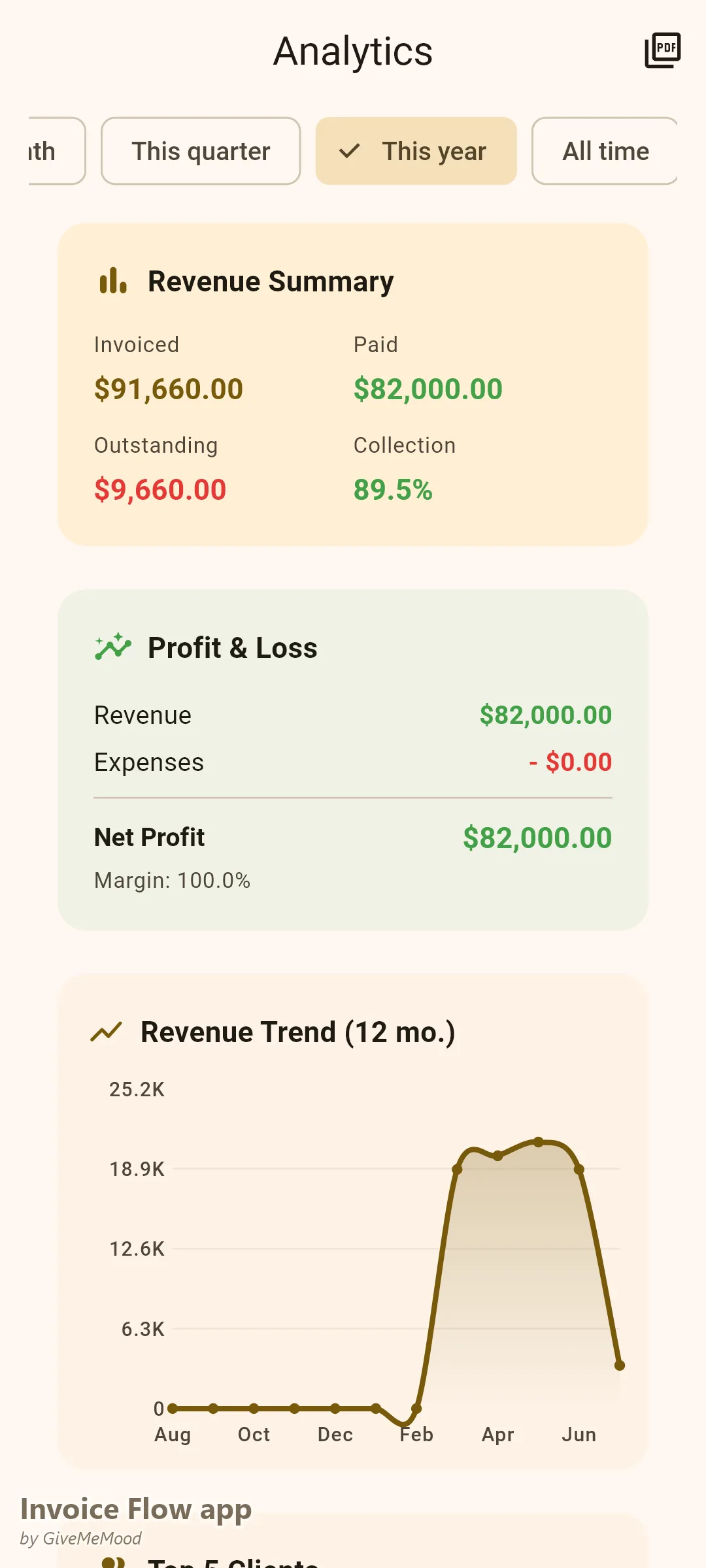
The fuel surcharge is a moving target. The DOE publishes a new national average diesel price each Monday. Freight broker contracts typically specify the surcharge table — a percentage of linehaul based on price bands.
I set up my fuel surcharge calculation in InvoiceFlow’s service catalog as a percentage line item. Each week I update the applicable rate. When I create an invoice, the fuel surcharge calculates automatically based on the linehaul value and the current week’s rate. No mental math. No errors.
For a load with a $1,103 linehaul at a 12.5% surcharge: $137.88 calculated automatically, no guesswork.
Broker vs. Direct Shipper Billing
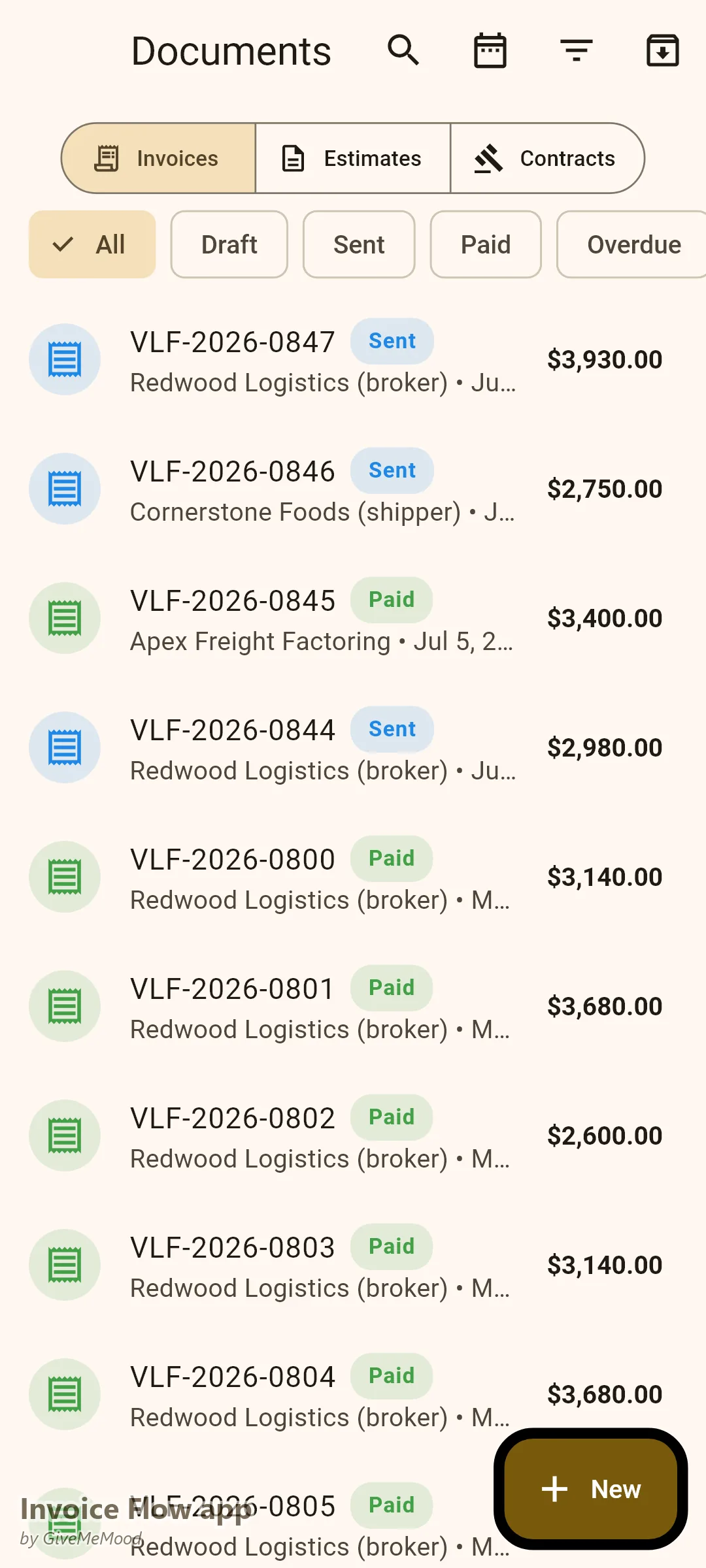
I run a mix of broker loads and direct shipper loads. The invoicing requirements differ.
Broker loads: The broker is my client. Invoice goes to them. They need the load number they assigned, the carrier’s MC number, the BOL number, and the rate confirmation reference.
“Freight Invoice — [Broker Name] — Load #BRK-2026-4421: Carrier: Marcus Webb Trucking | MC# 12345678 Rate Confirmation #: RC-BRK-4421 BOL #: BOL-MEM-ATL-062 Linehaul: $1,103.00 Fuel Surcharge (12.5%): $137.88 Total: $1,240.88”
Direct shipper loads: The direct shipper relationship has different requirements — sometimes a purchase order, sometimes an account number, sometimes net-30 rather than net-15 terms. I add custom fields in InvoiceFlow for each direct client.
Factoring Company Integration
About forty percent of my invoices run through a factoring company — they advance me immediate payment and collect from the broker or shipper directly. The factoring company requires a specific set of documents with each invoice submission: the signed BOL, the rate confirmation, and the invoice itself.
Having InvoiceFlow-generated invoices with consistent formatting means the factoring company processes my submissions without friction. They have told me my submissions are among the cleanest they receive from owner-operators.
The Results After Two Years
After two years of structured freight invoicing:
- My estimated fuel surcharge collection is now accurate to within 1-2% of what I am actually owed
- Detention fees are collected on virtually every qualifying load
- Accessorial charges are documented and invoiced before I leave the location
- My annual revenue increased by approximately $10,000 without hauling an additional load — purely from billing what I was already earning
- The 2021 dispute type has not recurred
The dispatcher at one of my regular broker relationships told me last year that I am one of the few owner-operators who sends invoices she never has to send back for missing information. That reputation gets me better loads.
Download InvoiceFlow. Build your freight invoice template. Document detention at the time it happens. Invoice before you leave the delivery location.
Marcus Webb is an owner-operator long-haul trucker based in Memphis, Tennessee, running interstate freight across the Southeast and Midwest.