 EN
EN  العربية
  Български
  Čeština
  Dansk
Dansk  Deutsch
  Ελληνικά
  Español
  Suomi
Suomi  Français
  עברית
עברית  हिन्दी
  Bahasa Indonesia
  Italiano
  日本語
日本語  한국어
한국어  Bahasa Melayu
  Nederlands
  Norsk
Norsk  Polski
  Português
  Română
  Русский
  Svenska
  Kiswahili
  ไทย
ไทย  Türkçe
  Українська
  Tiếng Việt
  中文
中文 The Wedding That Almost Ended My Catering Business
By Priscilla James, Catering Company Owner — Atlanta, GA
I founded Magnolia Catering in 2015. By 2019 we were doing 80 events per year — weddings, corporate dinners, graduation parties, nonprofit galas. The business had real momentum. I had three full-time staff and a pool of eight regular part-time servers and kitchen staff.
Then August 2019 happened. A Saturday wedding, 160 guests, full service including a five-course dinner, two bars, and a dessert table. We executed perfectly — the client’s mother told me it was the best wedding food she’d ever had. Twelve weeks later, the invoice remained unpaid. Fourteen weeks: unpaid. Sixteen weeks: the client stopped responding to email.
The invoice was $14,800. My food cost for the event was $6,100. My labor cost was $2,400. My net margin on the event, if paid, would have been approximately $6,300. If not paid — which is what happened — my net loss was $8,500.
I hired a collections attorney. We recovered $4,200 after fourteen months and $1,800 in attorney fees. Net recovery: $2,400 from a $14,800 invoice.
The root cause was not client fraud. The couple had genuine financial difficulties after the wedding. The root cause was my deposit structure: I had collected a $2,000 deposit on a $14,800 engagement. The deposit covered less than 14% of the event cost. I had essentially extended $12,800 in unsecured credit to clients I’d met twice.
Rebuilding the Deposit Structure
After the wedding loss, I rebuilt deposits across every event type:
New Deposit Policy:
- Weddings and large events (over $5,000): 40% non-refundable deposit at contract signing
- Corporate events: 30% deposit at booking, balance net-30 after event
- Social events ($1,000–$5,000): 50% deposit at booking, balance due day before event
- Balance payment: Due 7-14 days before event (not after)
The critical change: balance due before the event, not after. This single change eliminated post-event collection risk entirely. The only money at risk after the event is the remaining balance — which is paid before the event happens.
The Wedding Catering Invoice Structure
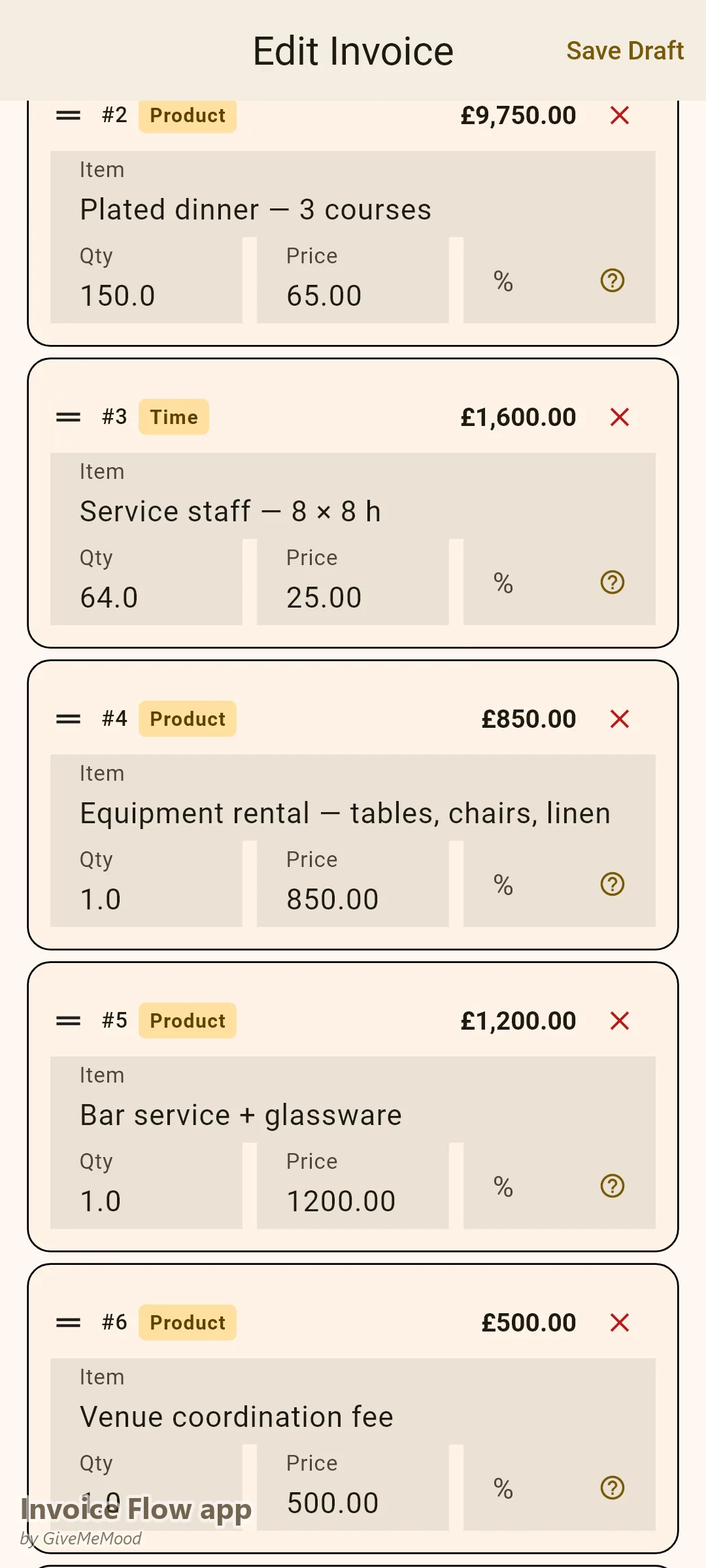
Event Catering — [Client Name] — [Event Date]:
- Event: Wedding Reception and Dinner | Guest count: 160 guests
- Event date: [Date] | Venue: [Venue Name, Address]
- Service: Full-service catering — setup, five-course dinner, two bars (beer/wine/NA), dessert table, breakdown and cleanup
- Per-head rate: $85/guest | Guest count guarantee: 160 guests minimum
- Food and beverage: 160 × $85 = $13,600.00
- Service fee (staffing, equipment, coordination): $1,800.00
- Event total: $15,400.00
- Deposit (40%, non-refundable, due at contract signing): $6,160.00
- Balance (due [14 days before event]): $9,240.00
- Guest count adjustment: Final balance adjusted based on confirmed guest count [N] days before event
- Cancellation: Deposit non-refundable. Events cancelled [N]+ days before event: deposit only. Events cancelled within [N] days: 75% of total fee.
The cancellation policy gradient — different terms for different cancellation windows — provides clients flexibility while protecting the business for last-minute cancellations.
Corporate Catering Invoices
Corporate clients have different payment dynamics — they can do net-30, but they need professional invoice format:
Corporate Catering — [Company Name] — [Date]:
- Event: [Company] Annual Awards Dinner
- Date: [Date] | Venue: [Name]
- Guests: 200 | Service: Plated four-course dinner, wine service, coffee and dessert
- Per-head: $95/guest (200 guests minimum)
- Food and beverage: 200 × $95 = $19,000.00
- Service and staffing: $2,400.00
- Total: $21,400.00
- Deposit (30%, due at booking): $6,420.00
- Balance (due [Net-30 after event]): $14,980.00
- PO Number: PO-2026-EVENTS-0022
- Payment Terms: Deposit due immediately; balance Net-30 post-event
Corporate clients get net-30 on the balance — they won’t approve a vendor who demands full pre-payment. The 30% deposit protects the food and labor cost investment.
Buffet and Drop-Off Catering Invoices
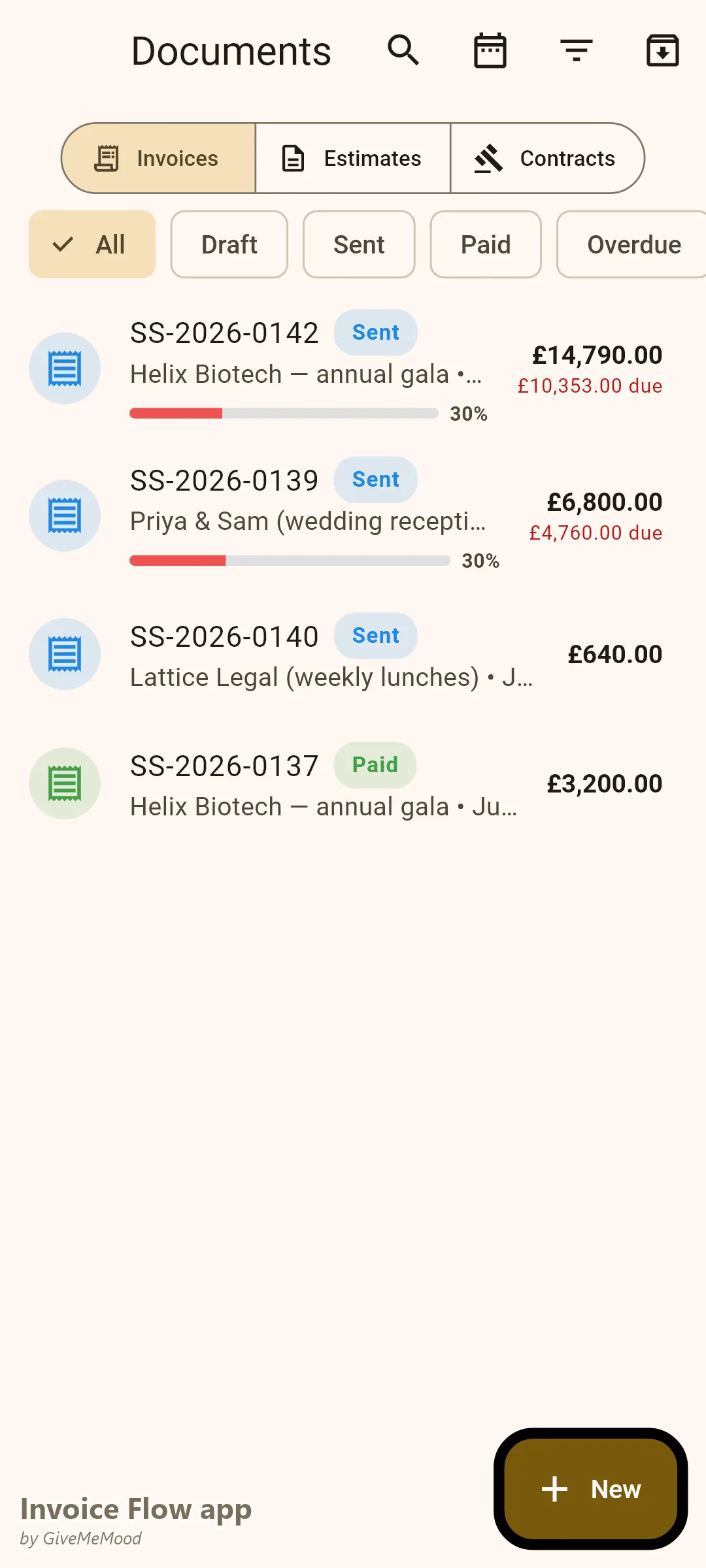
Simpler events with no full service:
Catering Drop-Off — [Client Name] — [Date]:
- Event: [Description] | Guest count: 45
- Menu: [Description — e.g., full lunch buffet: Caesar salad, pasta bar, grilled chicken, bread, beverages]
- Food and beverage: $1,125.00 ($25/person × 45 guests)
- Delivery fee: $85.00
- Disposables (plates, napkins, serving equipment): $45.00
- Total: $1,255.00
- Payment: Paid in full at delivery | Cash, Zelle, or card accepted
Drop-off catering is paid at delivery — cash or digital payment, no invoicing required. But for clients who need an invoice for expense reimbursement:
Payment Terms: Due upon delivery. Invoice for expense reporting purposes.
The Business After the Deposit Rebuild
Since rebuilding the deposit structure in late 2019:
- No uncollected balances over $500 in five consecutive years
- Events per year: grew from 80 to approximately 130
- Average event value: increased from $4,200 to $6,800 as we moved upmarket
- Monthly revenue: approximately $73,000/month (seasonally variable)
The deposit structure change didn’t just protect cash flow. It filtered clients. People who won’t commit to a deposit don’t have the financial commitment to follow through on a large event contract.
What InvoiceFlow Does for Catering Companies
Catering billing involves wedding and event invoices with multi-stage deposit structures, corporate catering with net-30 on the balance, drop-off catering with day-of payment, and enterprise PO fields. InvoiceFlow handles all of these from one Android app — recurring invoices for corporate accounts, deposit billing with cancellation policy, and the guest count adjustment notes that make catering invoices accurate.
Download InvoiceFlow. Build the deposit structure into the invoice template. Set the balance due before the event. The deposit protects your food cost. The balance before the event eliminates post-event collection risk.
Priscilla James is the owner of Magnolia Catering in Atlanta, Georgia, providing full-service catering for weddings, corporate events, social celebrations, and nonprofit galas.