
 EN
EN  العربية
  Български
  Čeština
  Dansk
Dansk  Deutsch
  Ελληνικά
  Español
  Suomi
Suomi  Français
  עברית
עברית  हिन्दी
  Bahasa Indonesia
  Italiano
  日本語
日本語  한국어
한국어  Bahasa Melayu
  Nederlands
  Norsk
Norsk  Polski
  Português
  Română
  Русский
  Svenska
  Kiswahili
  ไทย
ไทย  Türkçe
  Українська
  Tiếng Việt
  中文
中文 The Corporate Wellness Contract That Rewired How I Charge for Everything
By Camille Okafor, Registered Dietitian — Atlanta, GA
I opened my private nutrition practice in 2018 after eight years working for a hospital system. I knew how to counsel patients. I knew my clinical stuff cold. What I didn’t know was how to run a billing system.
For the first two years, I charged per session: $125 for a 60-minute initial consultation, $85 for follow-ups. I invoiced after appointments, waited to be paid, followed up when I wasn’t. The income was real but the cash flow was unpredictable. Some months I collected $4,200. Some months I collected $2,600. I had the same overhead either way.
In 2020 a mid-size law firm reached out. Their HR director had read an article about employee wellness programs and wanted to offer nutrition counseling as a benefit. They had 140 employees and wanted to offer monthly group sessions plus discounted individual consultations for anyone who wanted them.
The contract size was approximately $3,200/month. I had no invoice that looked like what their accounts payable expected.
The Corporate Wellness Invoice That Opened the Door
Law firm HR departments run on purchase orders, net-30, and W-9s. I had none of that structure.
Here’s what I built:
Corporate Wellness Services — [Firm Name] — [Month Year]:
Billing Period: [Month Year]
- Monthly group nutrition workshop (75 min, all-staff eligible): $850.00
- Individual consultations: [N] sessions × $95.00/session = $[total]
- Monthly wellness report (participation summary, aggregate goals): $150.00
- Invoice total: $[total]
Remit to: Camille Okafor, RD | EIN: [XX-XXXXXXX] PO Number: [PO-####] Payment Terms: Net-30 W-9 on file
That first invoice went out for $1,245 — a partial month while we finalized the scope. The full monthly contract started the following month: $3,200.
The key was the EIN and W-9. Corporate HR departments pay contractors on file. Without the EIN on the invoice, I was asking them to create a vendor record they couldn’t complete.
Individual Client Package Invoices
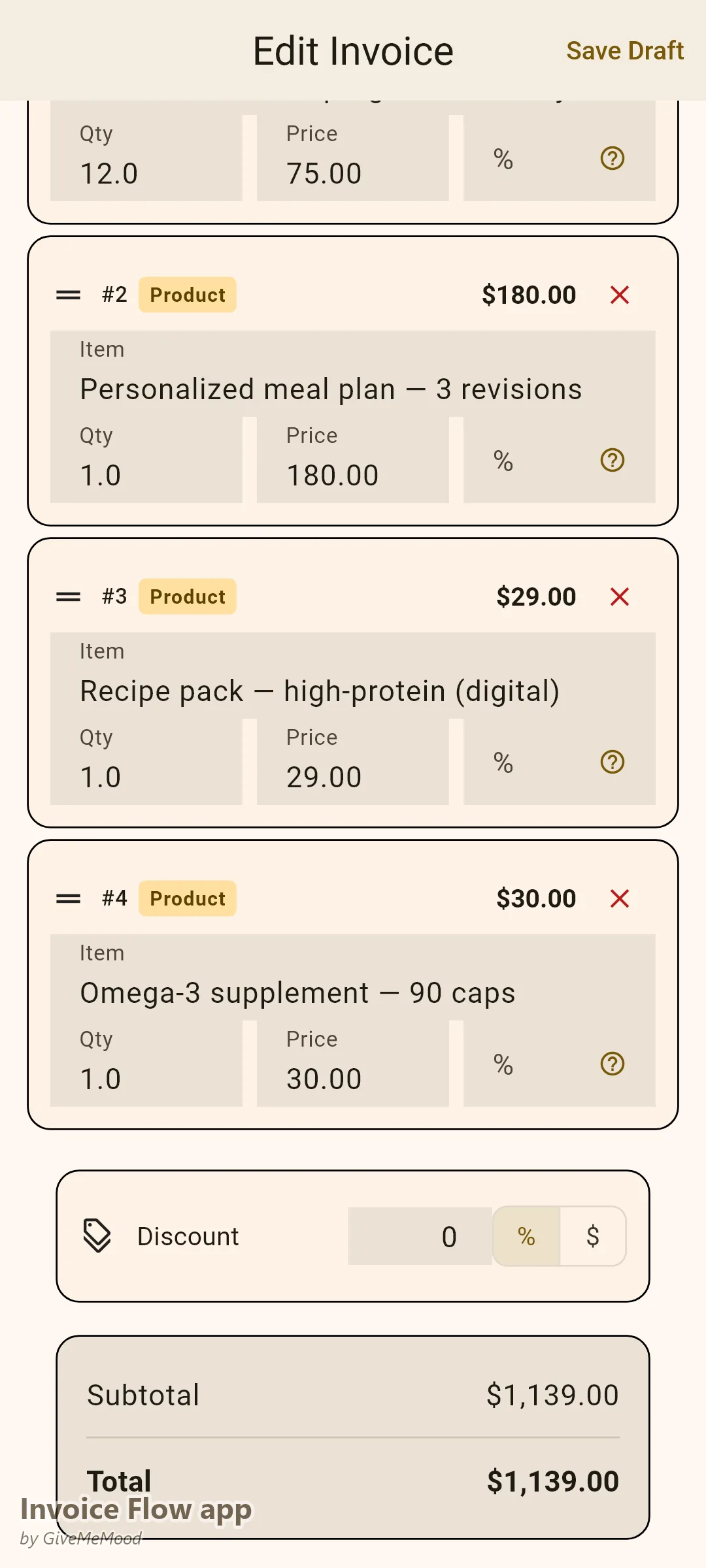
The corporate account made me rethink how I billed individual clients too. I was charging per session, which meant clients could cancel a single appointment and I’d lose that revenue with no recourse.
I rebuilt to packages:
Nutrition Counseling Package — [Client Name] — [Date]:
- Package: [Foundation 3-month | Transform 6-month | Maintenance 12-month]
- Includes: [N] initial consultation + [N] follow-up sessions + [N] check-in calls + meal plan + resources
- Package rate: $[amount] (saves $[amount] vs. per-session pricing)
- Payment: Paid in full or monthly installments
Monthly installment option:
- Month 1 (due at enrollment): $[amount]
- Month 2 (auto-billed on [date]): $[amount]
- Month 3 (auto-billed on [date]): $[amount]
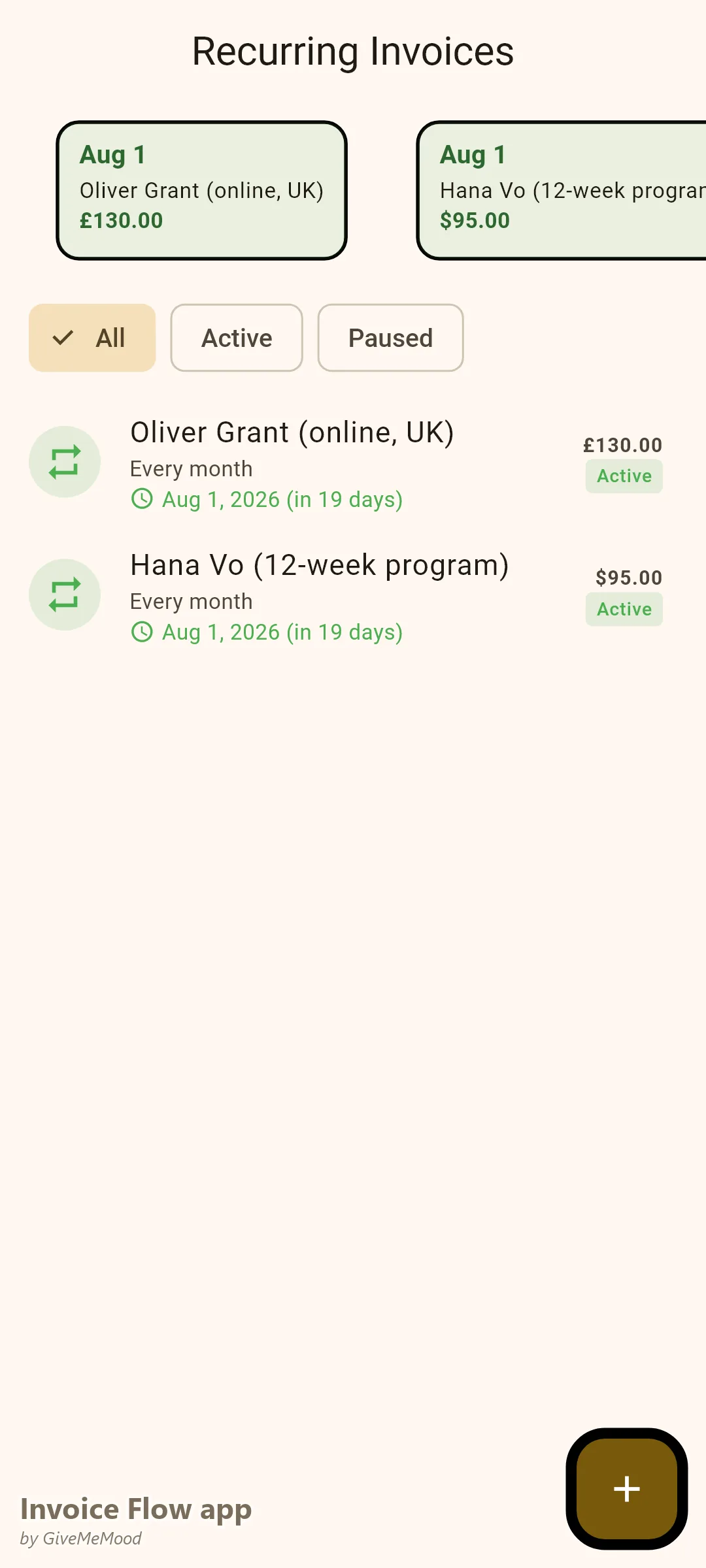
InvoiceFlow generates and sends each installment invoice on the scheduled date. I stopped chasing monthly payments.
The shift from per-session to packages changed my revenue predictability completely. A client on a 3-month package is committed revenue. A per-session client can disappear after one appointment.
Why Package Pricing Works for Nutrition Practices
Per-session pricing undervalues the work and creates perverse incentives. A client who feels better after 3 sessions might stop coming — even though the long-term behavior change work happens in months 4–6. Package pricing keeps the client engaged through the full protocol.
My package structure:
- Foundation (3 months): Initial assessment + 6 follow-ups + 1 check-in call/month + custom meal plan. $[amount]
- Transform (6 months): Initial assessment + 12 follow-ups + 2 check-in calls/month + quarterly lab review support. $[amount]
- Maintenance (12 months): Monthly accountability session + quarterly comprehensive review + unlimited messaging. $[amount]
Each package has a separate InvoiceFlow template. New client enrollment: I open the appropriate template, enter the client’s details, and the pricing, session count, and installment schedule auto-populate.
Group Programs and Workshops
Online workshops and group programs became a significant revenue stream after 2020.
Nutrition Workshop Invoice — [Group Program Name] — [Date]:
- Program: [Title] — [N]-week group program
- Format: [Live video / Recorded + live Q&A]
- Enrollment: [Dates]
- Program rate: $[amount] per participant
- Participants: [N] enrolled
- Total revenue: $[total]
For prepaid group programs, I invoice at enrollment. For cohort programs with installments:
- Enrollment deposit (30%, due at registration): $[deposit]
- Balance (due at program start): $[balance]
Insurance Reimbursement Documentation
Some clients use health savings accounts (HSAs) or flexible spending accounts (FSAs), or request documentation for insurance reimbursement. I’m not in-network with any insurers, but I provide detailed superbills on request.
Superbill / Reimbursement Documentation — [Client Name] — [Date of Service]:
- Provider: Camille Okafor, MS, RD | NPI: [XXXXXXXXXX]
- Service Date: [Date]
- Diagnosis code (ICD-10): [Code — e.g., Z71.3 Dietary counseling]
- Procedure code (CPT): [Code — e.g., 97802 Medical nutrition therapy, initial]
- Service: [Description]
- Fee: $[amount]
- Amount paid by patient: $[amount]
- Balance: $0.00 (paid in full)
I add a note: “This is a superbill for patient reimbursement purposes. It does not constitute a claim submission to any insurer.” Clients use this to seek out-of-network reimbursement from their insurance or FSA/HSA.
Retainer Clients
Some long-term clients want ongoing access without booking individual sessions: a monthly retainer for unlimited messaging, quick questions, and one scheduled check-in per month.
Monthly Retainer — [Client Name] — [Month Year]:
- Retainer: Ongoing Nutrition Support
- Includes: Unlimited messaging response (24-hr turnaround) + one 30-min monthly check-in
- Retainer rate: $[amount]/month
- Auto-billed on the 1st of each month
- Payment via the method shown on the invoice
12 retainer clients × $175/month = $2,100/month, invoiced automatically on the 1st regardless of my session schedule that week.
Five Years In
I left the hospital system with $0 in private practice revenue. Five years later:
- Corporate wellness contracts (3 firms): approximately $9,600/month
- Individual packages (active clients): approximately $7,200/month
- Group programs and workshops: approximately $3,400/month
- Monthly retainers (12 clients): approximately $2,100/month
- Speaking and consulting: approximately $1,800/month
- Total monthly revenue: approximately $24,100/month
The per-session model would have kept me around $6,000–$8,000/month. The shift to packages, retainers, and corporate contracts built the rest.
Download InvoiceFlow. Build package templates with installment schedules. Set retainers to auto-bill on the 1st. Add EIN and W-9 status to corporate invoices. The corporate wellness contract that scared you because you didn’t have the invoice structure — that’s the one worth going back for.
Camille Okafor is a registered dietitian in Atlanta, Georgia, with a private nutrition practice serving individual clients on package programs, corporate wellness accounts, and monthly retainer arrangements.