 EN
EN  العربية
  Български
  Čeština
  Dansk
Dansk  Deutsch
  Ελληνικά
  Español
  Suomi
Suomi  Français
  עברית
עברית  हिन्दी
  Bahasa Indonesia
  Italiano
  日本語
日本語  한국어
한국어  Bahasa Melayu
  Nederlands
  Norsk
Norsk  Polski
  Português
  Română
  Русский
  Svenska
  Kiswahili
  ไทย
ไทย  Türkçe
  Українська
  Tiếng Việt
  中文
中文 From Tax Season Chaos to Year-Round Retainer Income
By Sandra Osei, CPA & Bookkeeping Consultant — Cleveland, OH
For the first nine years of my accounting practice, I operated on the tax profession’s traditional calendar: January through April at full intensity, May through December scraping for project work. The seasonality was built into the business model. Tax preparation was the core service. Everything else was secondary.
In 2021, I calculated what that model was actually costing me. My April 30th revenue was roughly seven times my average October revenue. I had 84 active tax clients. Of those, 31 had bookkeeping needs year-round — managing their books monthly, preparing financials for their bank, tracking quarterly estimated taxes. Of those 31, I was providing ongoing services to exactly 9.
The other 22 were using me for taxes and finding someone else for monthly bookkeeping, or doing it themselves badly and bringing me the cleanup every April.
I had been leaving monthly recurring revenue on the table from clients who already trusted me.
The Conversion to Monthly Bookkeeping Retainers
I reached out to the 22 clients I identified and offered a monthly bookkeeping retainer. The pitch was simple: instead of bringing me a year of unreconciled transactions every February, let me maintain your books monthly. You’ll have accurate financials year-round. Tax season will take two weeks instead of six.
Seventeen of the twenty-two said yes immediately. Three said yes after seeing the pricing. Two declined — they were doing their own books and were satisfied.
The monthly retainer pricing I built:
Bookkeeping Retainer Tiers:
- Starter — $350/month: up to 150 transactions, bank reconciliation, monthly financial summary
- Growth — $650/month: up to 350 transactions, bank + credit card reconciliation, monthly financials, quarterly estimated tax calculations
- Business — $1,100/month: up to 700 transactions, full reconciliation, monthly financials, payroll journal entries, quarterly tax planning call
- Enterprise — $1,800/month: unlimited transactions, full-service bookkeeping, monthly review call, audit preparation support, annual tax included
The second billing challenge: InvoiceFlow let me set up recurring monthly invoices for each client at the appropriate tier, auto-generated on the first of the month.
The Monthly Bookkeeping Retainer Invoice
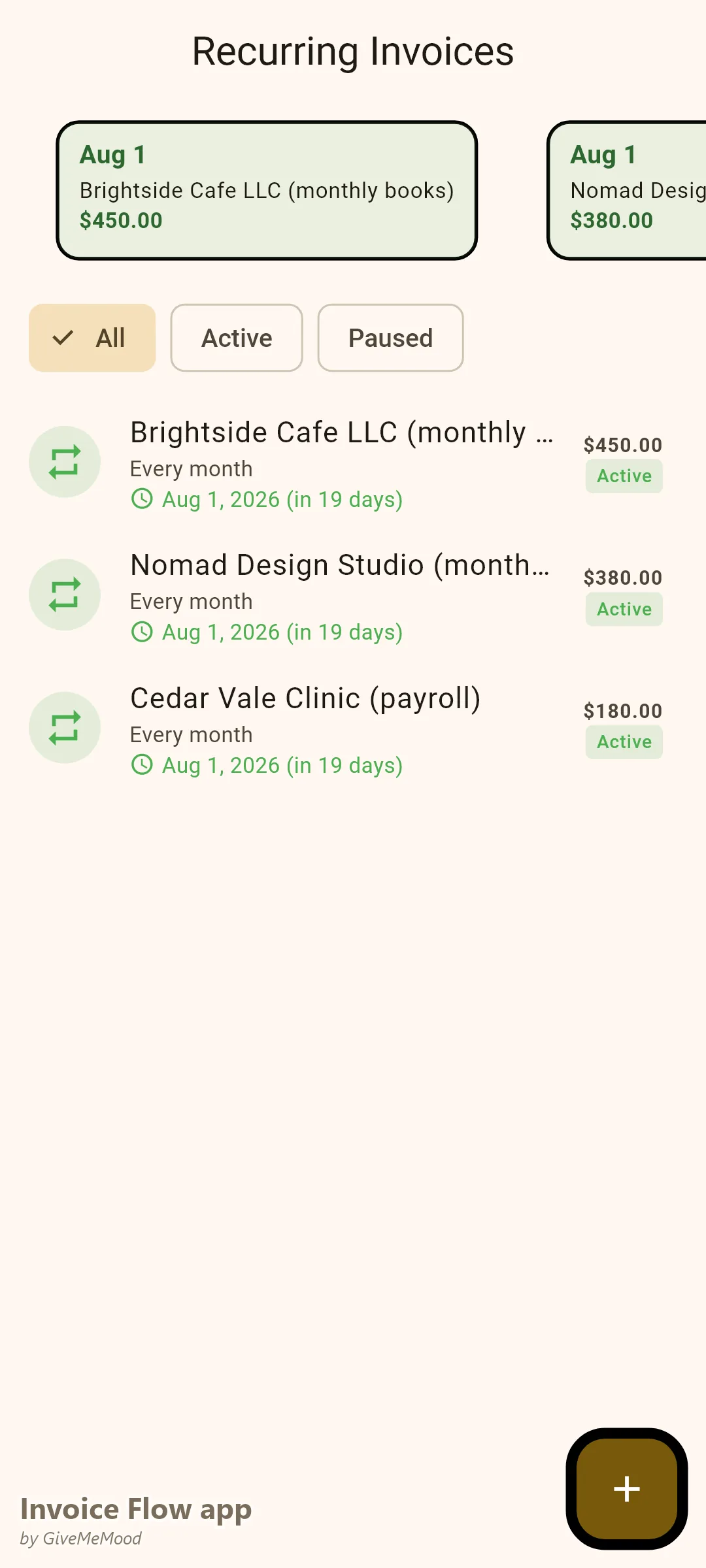
For each recurring client, InvoiceFlow sends:
Monthly Bookkeeping Services — [Business Name] — [Month Year]:
- Service: Monthly Bookkeeping — Growth Tier
- Scope: Transaction reconciliation (up to 350/month), bank and credit card reconciliation, monthly P&L and balance sheet, quarterly estimated tax calculation
- Monthly period: April 1 – April 30, 2026
- Monthly fee: $650.00
- Payment Terms: Net-15 (auto-drafted on 15th)
Consistent invoice format, same amount, same date every month. Clients see exactly what they’re paying for. Questions about the engagement scope essentially stopped after I added the scope description to the template.
Tax Preparation Invoices for Annual Clients
For clients who use me only for annual tax preparation, I invoice on completion:
Tax Preparation Services — [Client Name] — Tax Year [Year]:
- Service: Individual Federal + State Tax Return
- Forms prepared: 1040, Schedule C, Schedule E, State [Name] Return
- Prior year comparison: Included
- Filing: E-filed [Date] upon payment
- Preparation fee: $485.00
- Payment Terms: Due before filing
The “e-filed upon payment” language is intentional. It prevents situations where the return is ready and the client delays payment — filing only happens after payment is received and confirmed.
Corporate and Business Tax Returns
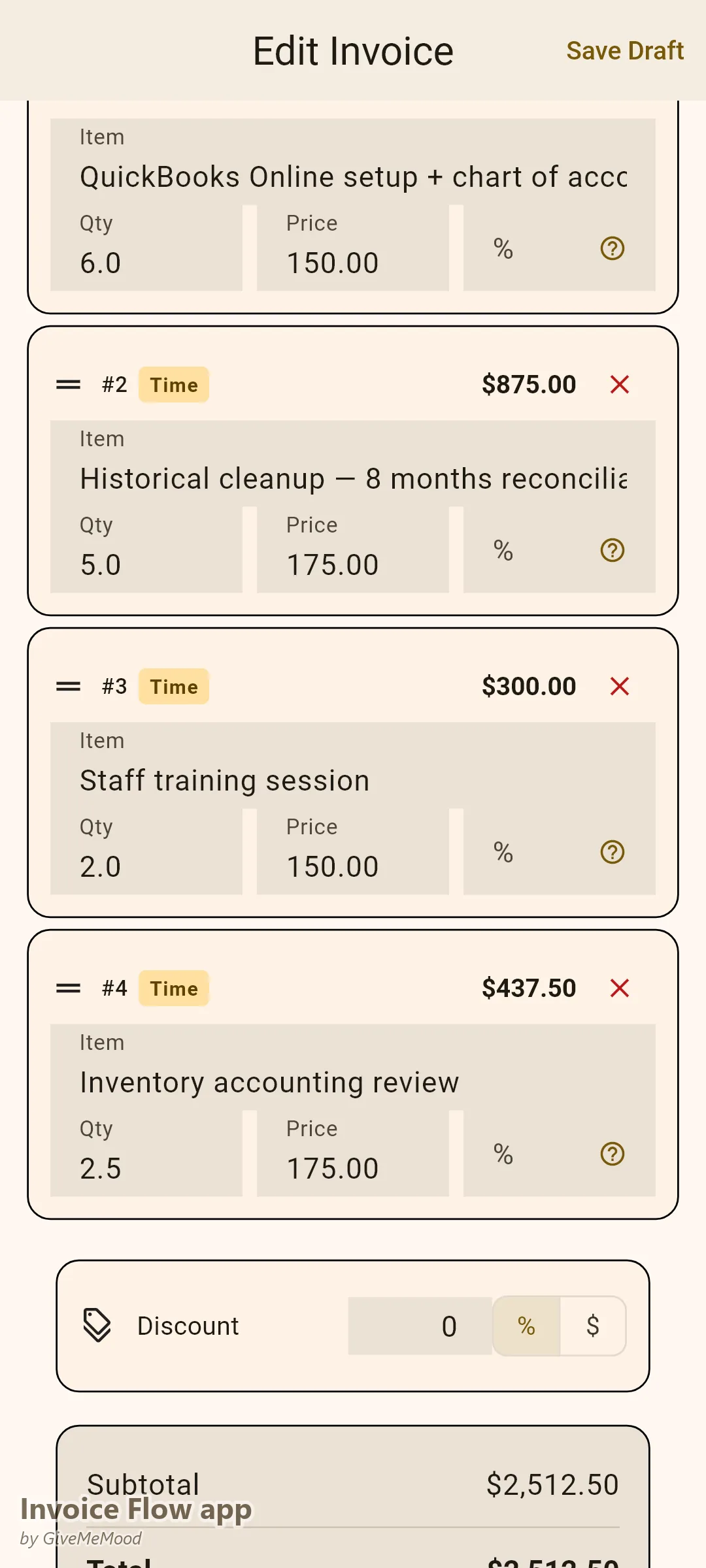
Business entity tax returns require more documentation on the invoice:
Business Tax Preparation — [Business Name] — Tax Year [Year]:
- Entity type: S-Corporation
- Forms: Federal Form 1120-S, State Corporate Return, K-1 Statements (3 shareholders)
- Services: Return preparation, K-1 preparation, e-filing coordination
- Preparation fee: $1,850.00
- Deposit (50%, due at engagement start): $925.00
- Balance (due upon completion): $925.00
The deposit for business returns protects against clients who disappear after receiving the return without paying. The 50% deposit at engagement start is now standard for all business entity returns.
CFO Advisory and Financial Consulting Invoices
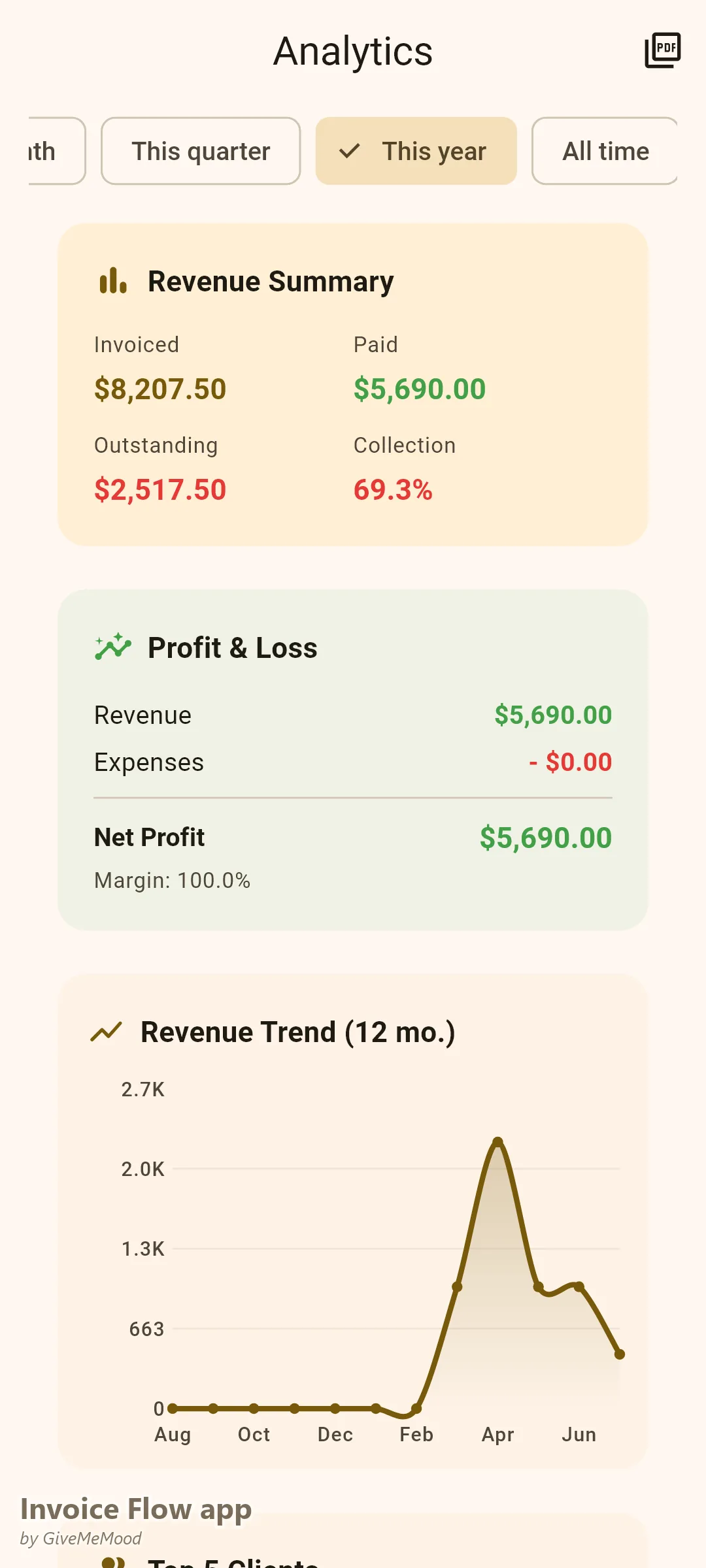
As bookkeeping retainer clients grew, so did consulting requests — cash flow analysis, budget modeling, lender presentation preparation. I bill these separately from bookkeeping:
Financial Consulting — [Business Name] — [Date]:
- Service: Small Business Loan Preparation — Financial Package
- Scope: 3-year financial statements, cash flow projections, lender narrative preparation
- Estimated hours: 8-12 hours
- 10.5 hours × $195/hour: $2,047.50
- Payment Terms: Net-15
Corporate clients with procurement departments add PO fields:
Accounting Services — [Company Name] — [Month Year]:
- Services: Quarterly financial review, management reports, budget variance analysis
- Hours: 12 × $195/hour: $2,340.00
- PO Number: PO-2026-FIN-0042
- Payment Terms: Net-30
Five Years After the Retainer Conversion
My practice metrics have changed substantially:
- 20 active monthly bookkeeping retainers at average $730/month: approximately $14,600/month recurring
- Annual tax preparation (84 clients): approximately $42,000/year
- Business tax returns: approximately $28,000/year
- CFO advisory and consulting: approximately $3,800/month
January through April still brings concentrated tax season revenue. But I now earn more in September than I did in any single month five years ago. The seasonal cliff is gone.
More importantly: I’m not onboarding new tax season clients with cleanup accounting disasters every February. The 20 retainer clients arrive at tax season with clean books and a complete financial year already reconciled.
What InvoiceFlow Does for Accountants and Bookkeepers
Accounting practice billing covers monthly recurring retainers auto-generated on schedule, annual tax preparation invoices with filing-on-payment terms, business entity tax returns with deposit structures, consulting and advisory invoices, and corporate PO fields for business clients. InvoiceFlow handles all of these from one Android app — the recurring billing infrastructure that makes a year-round accounting practice viable.
Download InvoiceFlow. Identify your existing tax clients with year-round bookkeeping needs. Build the retainer tiers. Set up the recurring invoices. The clients are already there — they just need a reason to consolidate with you.
Sandra Osei is a CPA and bookkeeping consultant in Cleveland, Ohio, providing monthly bookkeeping services, individual and business tax preparation, and CFO advisory services for small and mid-size businesses.