
 EN
EN  العربية
  Български
  Čeština
  Dansk
Dansk  Deutsch
  Ελληνικά
  Español
  Suomi
Suomi  Français
  עברית
עברית  हिन्दी
  Bahasa Indonesia
  Italiano
  日本語
日本語  한국어
한국어  Bahasa Melayu
  Nederlands
  Norsk
Norsk  Polski
  Português
  Română
  Русский
  Svenska
  Kiswahili
  ไทย
ไทย  Türkçe
  Українська
  Tiếng Việt
  中文
中文 How I Stopped Selling My Time and Started Selling Outcomes
By Thomas Gray, Management Consultant — Chicago, IL
I left a Big Four consulting firm in 2018 with fifteen years of management consulting experience, a strong professional network, and a billing model that I assumed would transfer directly to independent practice. The Big Four model is simple: bill by the hour, staff by the project, charge what the market will bear.
What I discovered is that the hourly model works well for a firm with 40 consultants. For an independent consultant, it has two structural problems.
The first problem: hourly billing creates a ceiling. You have a fixed number of hours. When you’re fully booked, the only way to earn more is to raise your rate. You’re always selling time, and time is finite.
The second problem: hourly billing misaligns incentives. Clients notice, consciously or not, that every question they ask costs them money. They ration their access to you. The relationship becomes transactional rather than advisory.
My first four independent projects were hourly-billed. They were professionally successful. The clients got what they needed. I got paid, sometimes after a longer wait than I’d have liked. But the income was lumpy — feast and famine — and I had no visibility into the next month.
I rebuilt the practice around outcomes. It took about two years.
The Shift to Project-Based and Retainer Billing
After the fourth hourly project, I made a deliberate decision: I would quote projects at a fixed project fee tied to outcomes, not hours. And I would convert clients who had ongoing needs into retained advisory relationships.
The project fee structure:
Project Engagement Rates:
- Diagnostic / assessment engagement (4-6 weeks): $18,000–$28,000
- Strategy development project (8-12 weeks): $35,000–$65,000
- Operational improvement program (12-24 weeks): $55,000–$120,000
- M&A due diligence support: Custom (typically $12,000–$25,000)
The advisory retainer structure:
- Advisory Retainer — $3,500/month: up to 8 hours of consultation, strategy review, monthly check-in, ad-hoc questions
- Strategic Advisory — $6,500/month: up to 20 hours, strategy and operational support, bi-weekly sessions, document review
- Board Advisory — $9,500/month: ongoing board-level strategic counsel, meeting preparation, stakeholder communication support
The Project Engagement Invoice
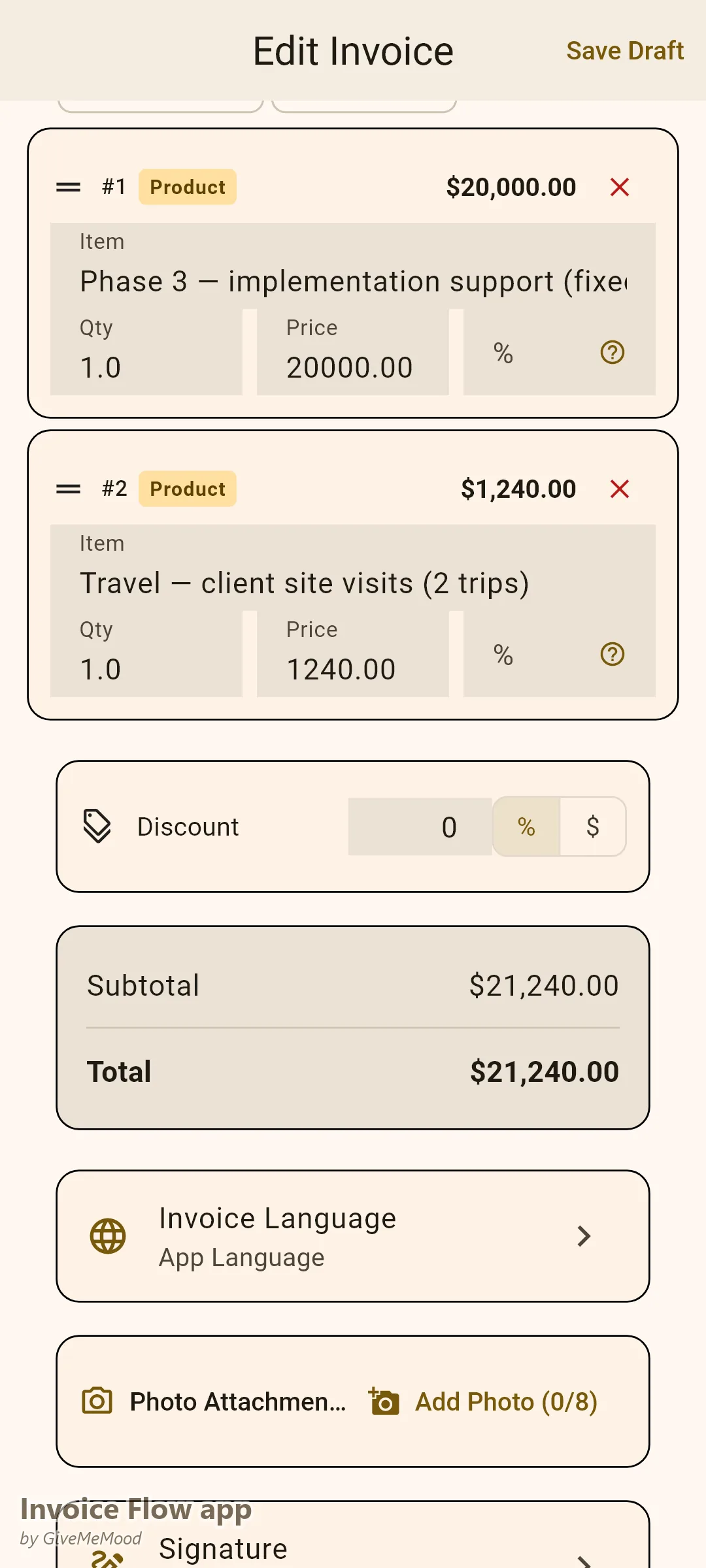
For project engagements, I use three-phase milestone billing:
Strategy Consulting — [Company Name] — Project Initiation:
- Project: [Project Description]
- Scope: As defined in Statement of Work dated [Date]
- SOW Reference: SOW-2026-[Number]
- Phase 1 of 3 (25% — Initiation and Discovery): $15,000.00
- Phase 2 milestone: 50% upon delivery of strategic recommendations draft
- Phase 3 milestone: 25% upon final presentation and deliverable acceptance
- Payment Terms: Net-15
Each phase invoice references the SOW and shows the full structure. Clients see that they’re progressing through a defined engagement, not buying unlimited time.
For large enterprise clients:
Management Consulting Services — [Enterprise Name] — [Date]:
- Project: Operational Efficiency Program — [Business Unit]
- SOW Reference: SOW-2026-CORP-0041
- Phase 2 milestone — Analysis and Recommendation (40%): $44,000.00
- PO Number: PO-2026-STRAT-0097
- Billing Contact: [Name], Strategic Initiatives
- Payment Terms: Net-30
The Advisory Retainer Invoice
Monthly advisory retainers auto-invoiced:
Strategic Advisory Retainer — [Company Name] — [Month Year]:
- Service: Strategic Advisory Retainer — [Tier]
- Included: Up to 20 hours consultation, bi-weekly advisory sessions, strategy document review
- Engagement highlights this month: [Brief note — e.g., board presentation review, market entry analysis]
- Monthly fee: $6,500.00
- Payment Terms: Net-15
The engagement highlights line is not a timesheet — it’s a reminder of the value delivered that month. Clients who see brief descriptions of what advisory time produced are more likely to renew than clients who see a fee with no context.
Scope Change Invoices
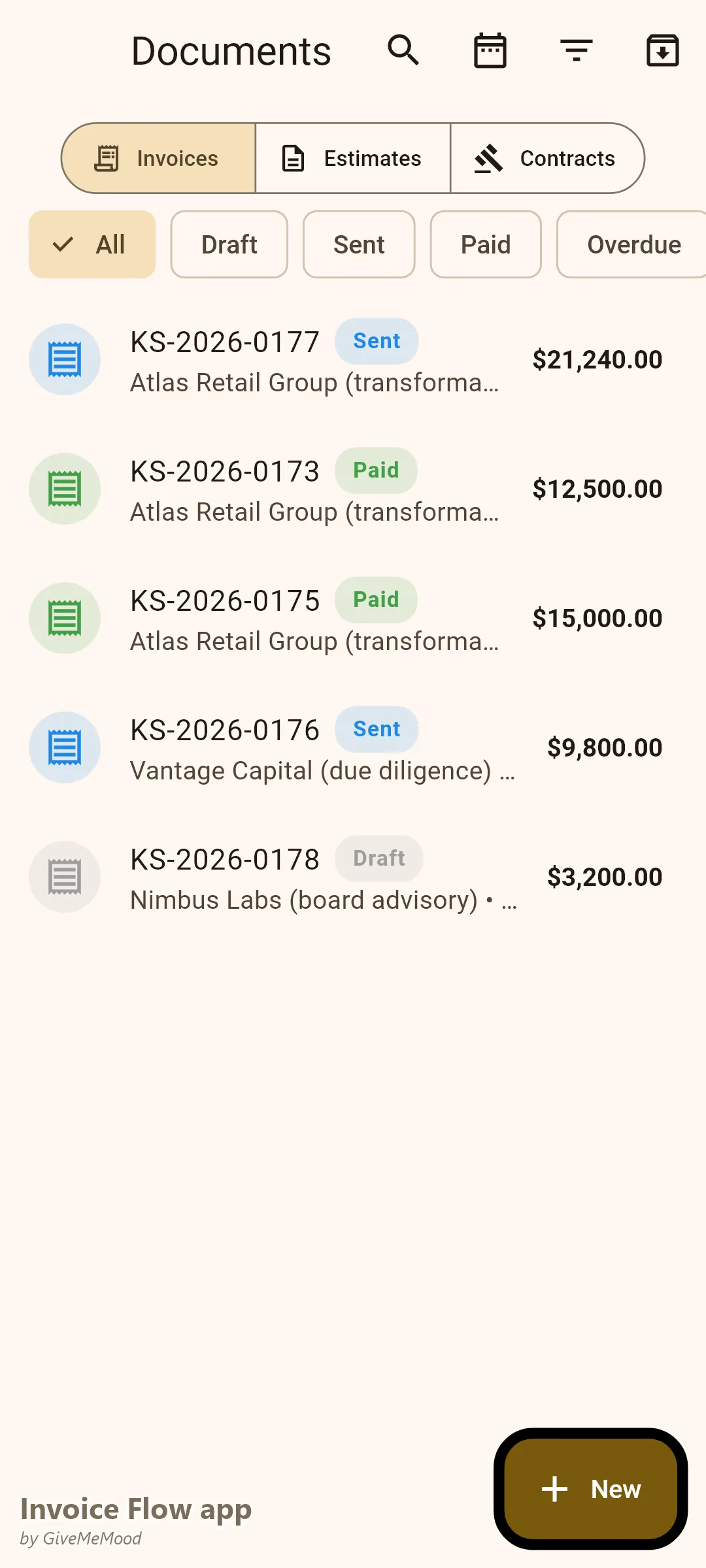
Projects expand. When they do, I document scope changes before doing the work:
Scope Change Authorization — [Company Name] — [Date]:
- Project: [Project Description] | SOW Reference: [SOW Number]
- Original scope: [Brief description]
- Scope change request: [Description of additional work requested]
- Additional work: [Hours/deliverables] at [Rate or Fixed Amount]
- Scope change fee: $8,500.00
- Authorized by: [Client Name, Title] | Authorization date: [Date]
- Payment Terms: Net-15
The authorization signature on the scope change invoice prevents retrospective disputes about whether the additional work was approved. I’ve had one scope dispute in four years. The invoice documentation resolved it in twenty minutes.
Due Diligence and Transaction Support
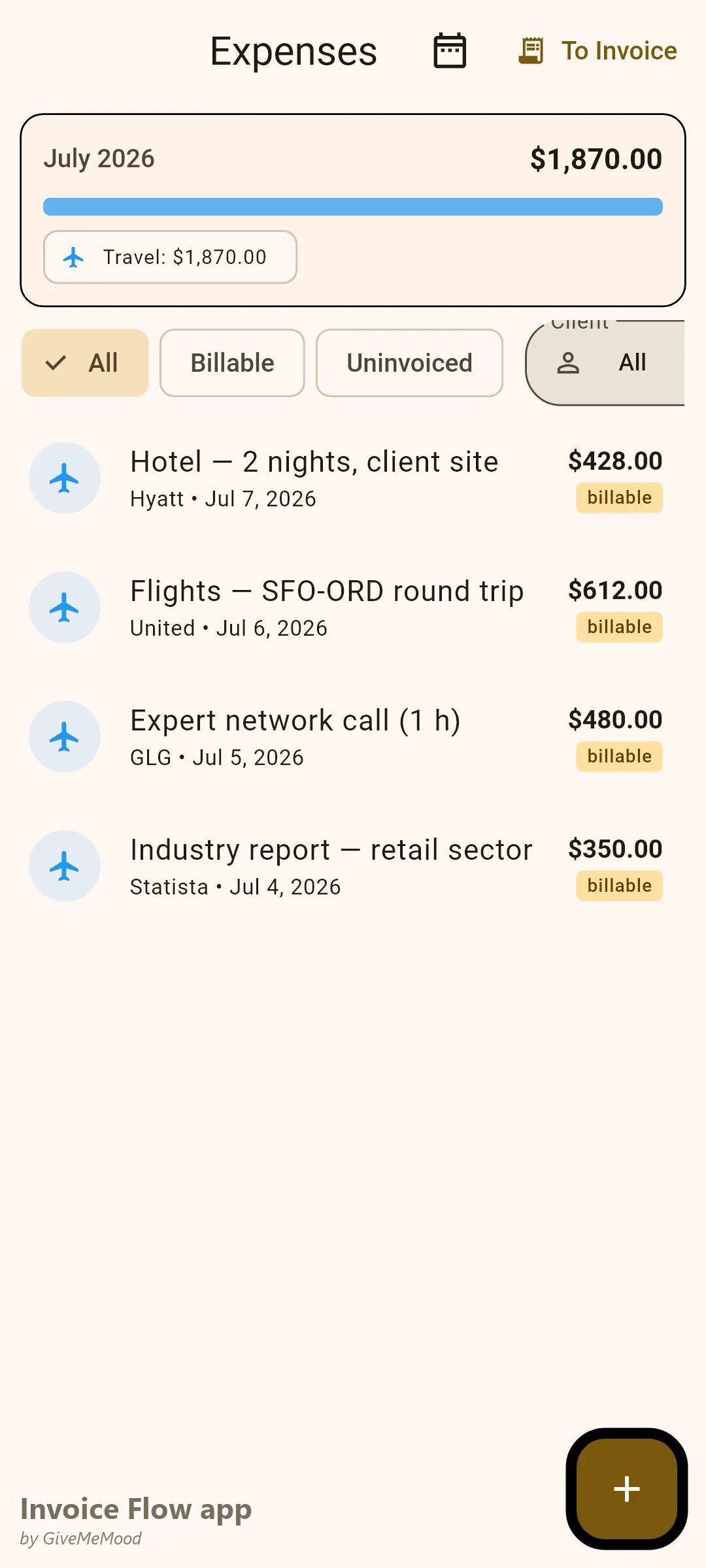
M&A and transaction advisory work is priced on complexity:
Due Diligence Consulting — [Company Name] — [Date]:
- Service: Operational Due Diligence — Target Company [Name]
- Scope: Business model review, operations assessment, synergy analysis, integration risk report
- Estimated 3-4 weeks | Fixed fee: $22,000.00
- Deposit (40%, due at engagement start): $8,800.00
- Balance (due upon report delivery): $13,200.00
- Confidentiality: Subject to NDA dated [Date]
The NDA reference on the invoice creates a documentation chain. If there are later questions about information handling, the invoice itself shows that the engagement was covered under the NDA.
Six Years Independent
Current practice metrics:
- 4 active advisory retainers: $3,500 + $6,500 + $6,500 + $9,500 = $26,000/month recurring
- Project engagements (typically 2-3 active simultaneously): approximately $18,000-$24,000/month
- Due diligence and transaction support: approximately $4,000/month average
- Total monthly revenue: approximately $48,000–$54,000/month
Year one of independent practice: approximately $180,000 annual revenue on hourly billing. Current year: on pace for approximately $600,000. The work is largely the same in quality. The billing model is fundamentally different.
The independent consulting career that looked uncertain in year one is now the practice I intended to build.
What InvoiceFlow Does for Management Consultants
Management consulting billing complexity — project milestone invoicing with SOW references, advisory retainers auto-generated monthly, scope change authorizations before work begins, enterprise PO fields, and transaction advisory with confidentiality documentation — is handled from one InvoiceFlow Android app.
Download InvoiceFlow. Build the three-phase project invoice template. Set up retainer billing for advisory clients. Issue scope change invoices before doing the work. The billing infrastructure supports the practice you want to build.
Thomas Gray is a management consultant in Chicago, Illinois, providing strategy development, operational improvement, M&A due diligence support, and strategic advisory services to mid-market and enterprise clients.