
 EN
EN  العربية
  Български
  Čeština
  Dansk
Dansk  Deutsch
  Ελληνικά
  Español
  Suomi
Suomi  Français
  עברית
עברית  हिन्दी
  Bahasa Indonesia
  Italiano
  日本語
日本語  한국어
한국어  Bahasa Melayu
  Nederlands
  Norsk
Norsk  Polski
  Português
  Română
  Русский
  Svenska
  Kiswahili
  ไทย
ไทย  Türkçe
  Українська
  Tiếng Việt
  中文
中文 Why I Left Commission-Based Advising and Built a Fee-Only Practice
By Robert Nakamura, Fee-Only Financial Advisor — Portland, OR
I spent eight years at a regional broker-dealer. I was good at the job — consistent performance, strong client relationships, solid production numbers. But I was uncomfortable with the conflict inherent in commission-based advising. When I recommended a product, clients had no way to know whether I was recommending it because it was right for them or because it paid me a better commission than the alternative.
In 2020, I left to build a fee-only RIA. The regulatory setup took several months. The client acquisition challenge I had anticipated. What I had not anticipated was that billing — which had always been handled by my broker-dealer’s back office — would be one of the more complex operational problems I’d need to solve.
Fee-only financial planning billing is genuinely different from most professional service billing. The invoice isn’t just an invoice — it’s documentation of a fee arrangement that clients may need for tax purposes (advisory fees deducted by some clients through certain retirement accounts), compliance purposes (fee disclosure requirements under fiduciary rules), and their own financial planning records.
Getting the invoice format wrong wasn’t just a professionalism problem. It was a compliance adjacent problem.
The Three Billing Models Fee-Only Advisors Use
After researching how other fee-only practices structured billing, I settled on three models for different client types:
Annual retainer, billed quarterly: Clients pay a flat annual fee for comprehensive financial planning and ongoing advisory relationship. I bill quarterly in advance — one-fourth of the annual fee at the start of each quarter.
AUM-based advisory fee: For investment management clients, I charge a percentage of assets under management, billed quarterly in arrears based on the prior quarter’s ending value.
Hourly consulting: For clients who want specific financial planning advice without an ongoing relationship — typically one-time plan reviews or specific situation consultations.
The Quarterly Retainer Invoice

For comprehensive financial planning clients on annual retainer:
Financial Planning Retainer — [Client Name] — Q[N] [Year]:
- Service: Comprehensive Financial Planning — Annual Retainer
- Retainer period: [Date] – [Date] (Q[N] [Year])
- Services included: Investment review, tax planning coordination, retirement income analysis, insurance review, estate plan coordination, unlimited consultation
- Annual retainer: $6,000.00
- Q[N] installment (25%): $1,500.00
- Billing basis: Flat annual retainer, billed quarterly in advance
- Fee disclosure: This fee is for financial planning services only and does not include investment management fees
The fee disclosure at the bottom is not optional boilerplate — it’s there because some clients have investment management relationships with custodians that charge separate fees, and I want the planning fee documented clearly and separately.
AUM-Based Advisory Fee Invoices
For investment management clients:
Investment Advisory Fee — [Client Name] — Q[N] [Year]:
- Account(s): [Account number(s) at Custodian]
- Billing period: Q[N] [Year] (January 1 – March 31, 2026)
- Portfolio value at billing date ([Date]): $847,320.00
- Annual advisory rate: 0.85%
- Quarterly fee (0.2125% of portfolio): $1,800.56
- Billing basis: AUM quarterly in arrears, based on prior quarter-end portfolio value
- Deduction method: Directly from [Account] — client authorizes quarterly deduction per advisory agreement
The deduction method note matters. Most RIA clients authorize direct account deduction — the custodian processes the fee directly from the investment account. The invoice documents what was deducted and on what basis.
Hourly Financial Planning Consultation
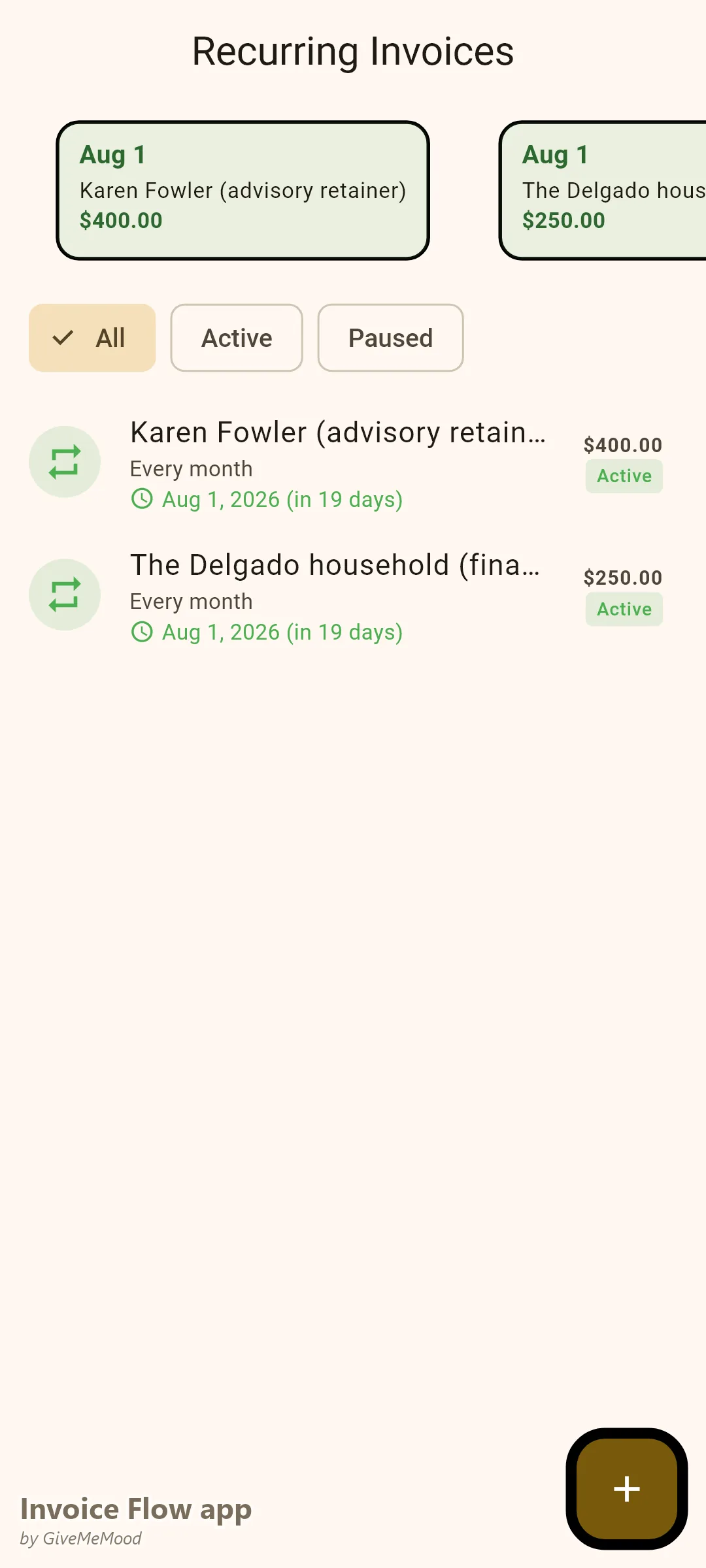
For standalone consultations — retirement readiness review, Social Security optimization, insurance audit:
Financial Planning Consultation — [Client Name] — [Date]:
- Service: Retirement Readiness Review
- Scope: Current savings assessment, projected income analysis, Social Security optimization review, withdrawal strategy recommendation
- Duration: 2.5 hours | Rate: $280/hour
- Consultation fee: $700.00
- Deliverable: Written summary report within 5 business days
- Payment Terms: Due at consultation
For multi-session engagement:
Financial Planning Project — [Client Name] — [Date]:
- Service: Comprehensive Financial Plan
- Scope: Full financial inventory, goals assessment, investment analysis, tax planning review, retirement and estate recommendations
- Estimated 6-8 hours over 3 sessions
- Project fee: $2,100.00
- Deposit (50%, due at first session): $1,050.00
- Balance (due upon plan delivery): $1,050.00
Corporate Benefit Consulting
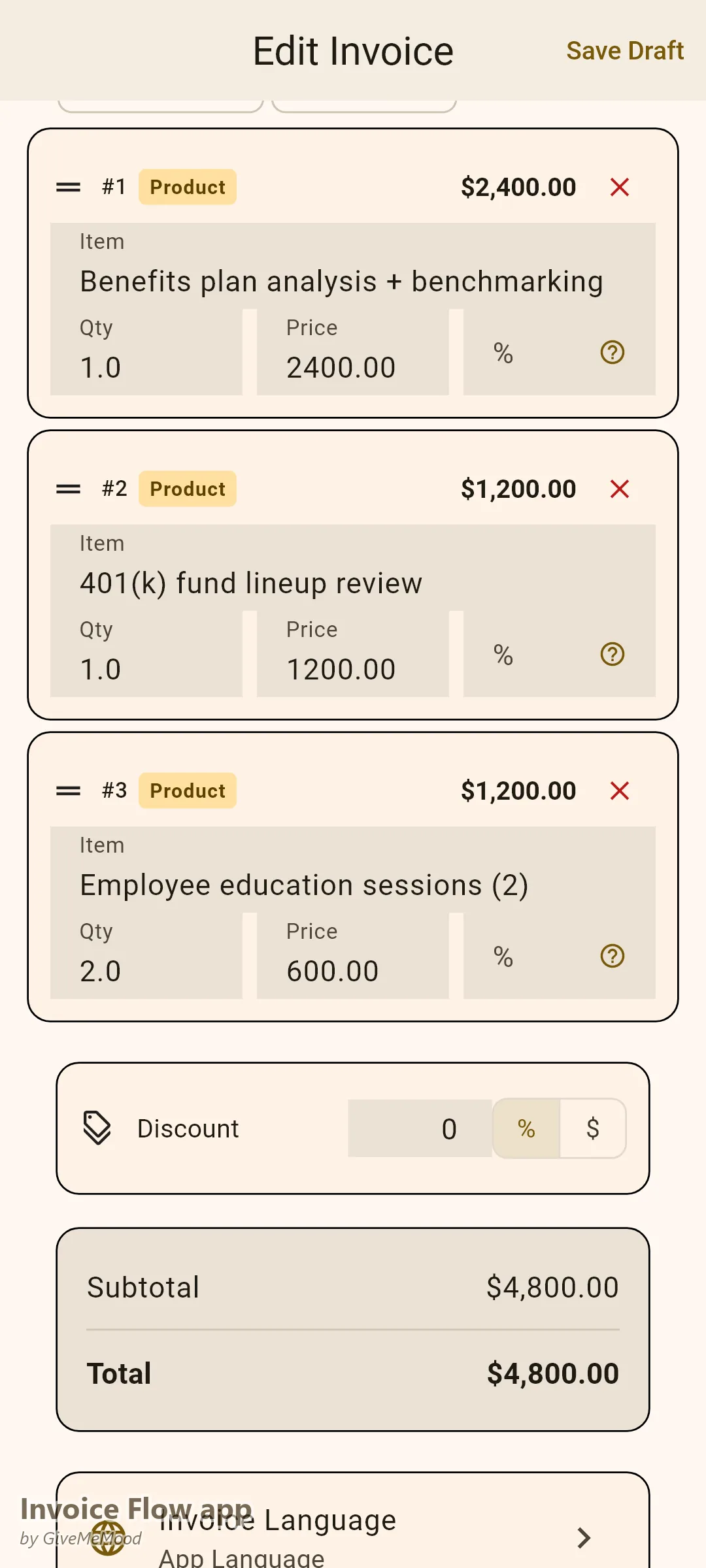
Companies bring me in for employee financial wellness — 401(k) enrollment education, retirement planning workshops, individual consultations for senior employees. These corporate engagements require procurement documentation:
Financial Education Services — [Company Name] — [Date]:
- Service: Employee Financial Wellness Workshop
- Topic: Retirement Planning for Mid-Career Employees
- Participants: 18 employees | Duration: 3 hours
- Workshop fee: $2,400.00
- Travel (round trip, 42 miles × $0.67): $28.14
- Total: $2,428.14
- PO Number: PO-2026-HR-0088
- Payment Terms: Net-30
For individual senior employee consultations arranged through corporate HR:
Executive Financial Planning — [Company Name] / [Employee Name] — [Date]:
- Service: Individual Financial Planning Consultation — [Employee Name], [Title]
- Scope: Benefits optimization, equity compensation planning, retirement transition
- 3 hours × $280/hour: $840.00
- Billed to: [Company Name] per employee benefits agreement
- PO Number: PO-2026-HR-0091
- Payment Terms: Net-30
Four Years as a Fee-Only RIA
Current practice metrics:
- 22 retainer clients (annual comprehensive planning): average $5,400/year: approximately $9,900/month
- 14 AUM clients: $1,800 average quarterly fee: approximately $8,400/month
- Hourly consultations: approximately $2,800/month
- Corporate financial wellness work: approximately $1,800/month average
- Total monthly income: approximately $22,900/month
The compliance discipline of fee-only billing — clear fee documentation, basis of fee disclosure, quarterly timing — has also improved my client relationships. Clients understand exactly what they’re paying and why. There are no surprises.
The broker-dealer days feel like a different career.
What InvoiceFlow Does for Financial Advisors
Fee-only financial advisor billing requires quarterly retainer invoices with fee disclosure language, AUM-based fee invoices showing portfolio value and rate calculation, hourly consultation invoices, project-based financial planning with deposit, and corporate financial wellness invoices with PO fields. InvoiceFlow handles all of these invoice structures from one Android app.
Download InvoiceFlow. Build the quarterly retainer template with your fee disclosure language. Create the AUM fee invoice with portfolio value and rate documentation. The billing structure that makes fee-only advisory professional is about format, and InvoiceFlow provides it.
Robert Nakamura is a fee-only financial advisor and registered investment advisor in Portland, Oregon, providing comprehensive financial planning, investment advisory services, and corporate employee financial wellness programs.